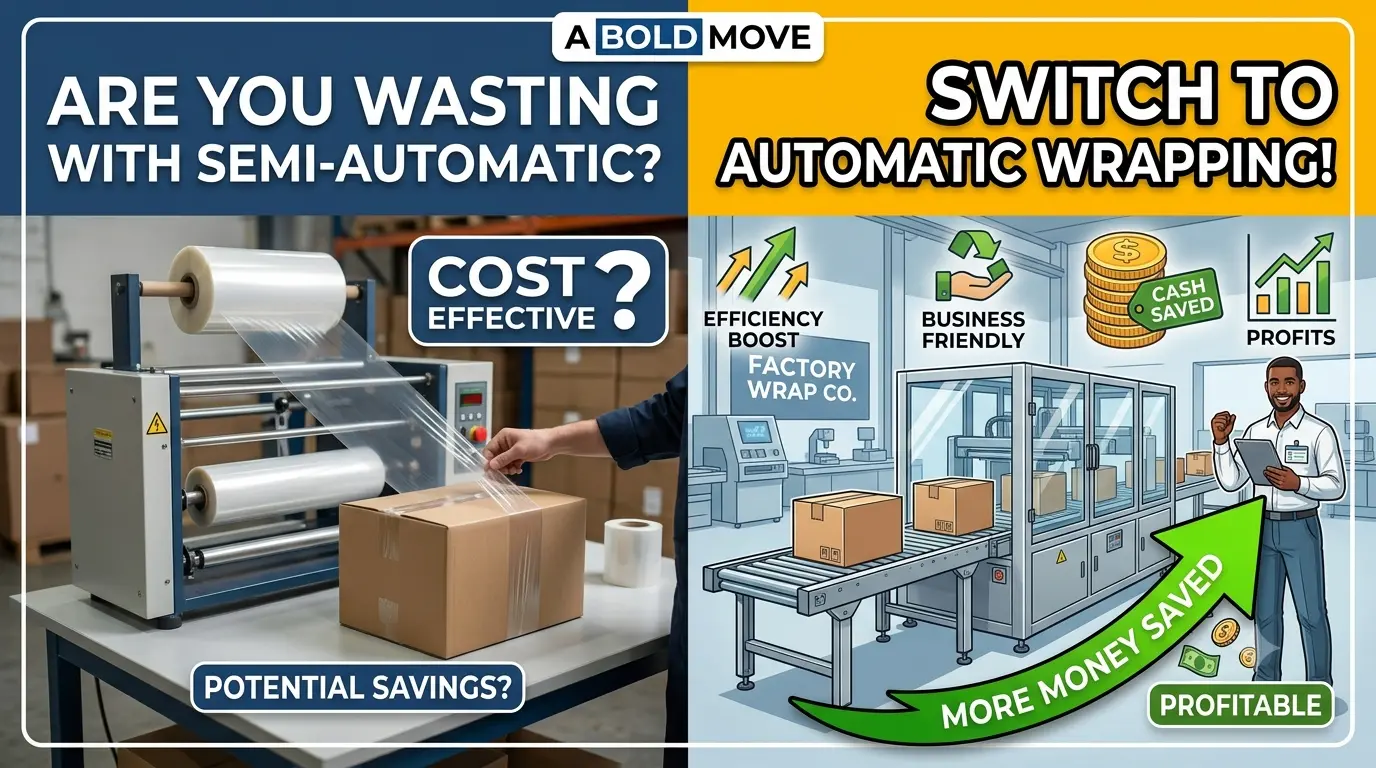


How to Choose the Right Box Wrapping Machine Supplier

 How to Choose the Right Box Wrapping Machine Supplier

How to Choose the Right Box Wrapping Machine Supplier

Packaging is the last step in your production line, but it is the first thing your customer sees. When you invest in the wrong box wrapping machine or work with the wrong supplier, the consequences show up fast, from inconsistent wrapping quality to machine breakdowns during peak season. Choosing the right supplier is not just a purchase decision. It is a long term business decision.

This guide walks you through every key factor you need to evaluate before signing any deal, so you can make a confident and informed choice.

1. Understand What Your Business Actually Needs

Before you search for any supplier, get clear on your own requirements. Many buyers rush into comparisons without knowing their own specifications.

Ask yourself these questions:

  • How many boxes do you wrap per hour on a busy day?
  • What are the sizes and weights of your boxes?
  • Do you need a semi-automatic or fully automatic machine?
  • Will this machine run continuously or only during peak hours?

When you have clear answers, you stop wasting time evaluating suppliers who cannot even meet your basic capacity. This single step saves weeks of back and forth conversations.

2. Check Manufacturing Capability, Not Just Sales Talk

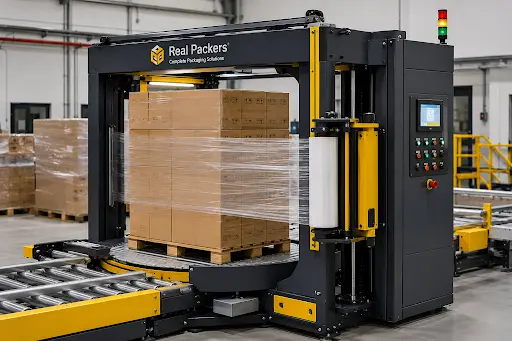
There is a big difference between a company that manufactures box wrapping machines and one that simply resells them. A manufacturer has direct control over build quality, spare parts, and technical customization. A reseller is dependent on a third party for every one of those things.

When evaluating a supplier, look for:

  • A production facility you can visit or verify
  • In-house engineering and assembly teams
  • The ability to customize machine dimensions for your box sizes
  • Clear documentation about materials and motor specifications

Always ask: Are you the manufacturer or the dealer? The answer tells you everything about how well they can support you after the sale.

3. Evaluate After-Sales Support Before You Buy

A box wrapping machine is a mechanical investment. Like any machine, it will need maintenance, occasional repairs, and spare parts over time. The real test of a supplier is not how smooth the sale is but how quickly they respond when something goes wrong.

Key support factors to verify:

  • Do they offer an Annual Maintenance Contract (AMC)?
  • Is on-site installation and training included?
  • How long is the warranty period?
  • Are spare parts readily available and affordable?
  • What is their average response time for technical support calls?

A supplier who avoids these questions during the sales conversation is likely to be unavailable when your machine needs attention in production.

4. Ask for a Live Demo Before Committing

Numbers and brochures look perfect on paper. Reality is different. A serious supplier will always be willing to demonstrate the machine live, either at their facility or yours. If a supplier hesitates when you ask for a demo, that is a signal worth paying attention to.

During the demo, pay attention to:

  • Wrapping speed and consistency across different box sizes
  • Noise levels during operation
  • Film loading and cutting mechanism
  • Ease of operation for floor level workers
  • How the machine handles irregular or lightweight boxes

A live demo removes guesswork and gives your team confidence before making a capital purchase.

5. Compare Total Cost, Not Just Machine Price

A lower machine price sometimes comes with a higher total cost. This is one of the most common mistakes buyers make. They focus on the sticker price and overlook the complete picture.

Look beyond the base price and factor in:

  • Installation and transportation charges
  • Cost of stretch film or wrapping material per roll
  • Electricity consumption of the motor
  • Maintenance and spare part expenses over 3 to 5 years
  • Downtime cost if the supplier has slow service turnaround

When you calculate the full operating cost, a slightly higher priced machine from a reliable supplier often works out more economical over time.

6. Review Client References and Past Delivery Track Record

Before finalizing any deal, ask the supplier for references from businesses similar to yours. A supplier with real clients in garment factories, e-commerce warehouses, or logistics companies can share feedback that brochures cannot.

Questions to ask references:

  • Did the machine perform as promised from day one?
  • Was delivery and installation on time?
  • How did the supplier handle any issues that came up?
  • Would you order from them again?

A supplier confident in their work will give you references without hesitation. Evasion is a red flag.

7. Why Industry Experience Matters When Choosing a Supplier

The packaging industry moves fast. Film types, machine technologies, and compliance requirements keep evolving. An experienced Box Wrapping Machine Supplier understands these shifts and guides you toward the right solution for today and tomorrow.

Experience brings:

  • Deeper knowledge of what works in real production environments
  • Stronger relationships with component manufacturers for faster spare parts
  • Better understanding of industry specific challenges in textiles, FMCG, or exports
  • A larger pool of client feedback that has shaped better product design over time

When a supplier has served hundreds of businesses across multiple industries, their product and service quality reflects that journey.

8. Red Flags to Watch Out For

Not every supplier who appears professional in their marketing is reliable in execution. Protect yourself by watching for these warning signs:

  • Vague answers about machine specifications or components used
  • No physical address or factory location to verify
  • Pushback when you ask for a demo or client references
  • No clarity on warranty terms or AMC availability
  • Pressure to make quick decisions with time limited offers

Trust your instincts. If a supplier makes you feel uncomfortable asking questions, they are not the right partner for your business.

9. What Sets Real Packers Apart as a Box Wrapping Machine Supplier

Real Packers has been serving the packaging industry since 1997, delivering reliable solutions to garment factories, export houses, and packaging businesses across India. As a trusted Box Wrapping Machine Supplier based in Tirupur, they bring more than two decades of hands-on manufacturing experience to every order.

What makes Real Packers a dependable choice:

  • Direct manufacturing: Machines are built in-house, not resold
  • Custom sizing: Machines configured for your specific box dimensions
  • On-site installation: Full setup and operator training at your facility
  • After-sales support: AMC options and spare parts readily available
  • Proven track record: Trusted by garment exporters in Tirupur, Chennai, and Bangalore

10. How to Make the Final Decision

Once you have evaluated multiple suppliers across all the factors above, narrow it down to two or three. Then schedule site visits or demos, compare total cost of ownership, and check references.

Your final shortlist criteria should include:

  • Manufacturing capability confirmed
  • Positive client references verified
  • Demo completed and machine performance assessed
  • Transparent pricing with no hidden charges
  • After-sales support structure clearly agreed upon

The right Box Wrapping Machine Supplier will make this evaluation easy because they have nothing to hide and everything to prove.

Conclusion

Choosing the right box wrapping machine supplier is not about finding the cheapest option or the flashiest brochure. It is about finding a partner who understands your production needs, delivers on their promises, and stands by you long after the sale.

Focus on manufacturing credibility, after-sales support, total cost of ownership, and real client feedback. These four pillars will guide you to a supplier who adds lasting value to your packaging operation.

Real Packers combine all of these qualities into one reliable partnership. As a leading Box Wrapping Machine Supplier with roots in the heart of India’s garment manufacturing hub, they are equipped to support your business at every stage of growth. Reach out to Real Packers today to explore the right machine solution for your packaging line.

Manual Wrapping vs Box Wrapping Machine: A Cost Comparison for Garment Factories

Manual Wrapping vs Box Wrapping Machine

Manual Wrapping vs Box Wrapping Machine: A Cost Comparison for Garment Factories

Every garment factory has a packaging floor. And on that floor, one question decides how much money leaves your business quietly every single month: are your workers still wrapping boxes by hand?

Manual wrapping feels familiar. It requires no upfront investment. It seems controllable. But when you actually sit down and count what it costs — in wages, in wasted material, in time, in errors — the numbers tell a very different story.

This blog breaks down the real cost difference between manual wrapping and machine wrapping, specifically for garment factories. No vague comparisons. Just the actual areas where money is being spent, saved, or quietly lost.

What Manual Wrapping Actually Costs a Garment Factory

Most factory managers think of manual wrapping as a low-cost option because there is no machine purchase involved. But the cost of manual wrapping is not in the equipment. It is in the people, the time, and the material.

In a garment factory handling medium to large order volumes, the packaging section typically needs multiple workers dedicated to wrapping boxes before dispatch. Each worker can wrap a fixed number of boxes per shift, and that number is limited by human speed and endurance.

Now consider what happens during peak export seasons. Order volumes go up. The wrapping team cannot keep pace. You either bring in additional workers, ask existing staff to work overtime, or your dispatch gets delayed. Every one of those outcomes adds to your cost.

Labour costs in the Indian garment and textile sector have been rising steadily. Research from the International Labour Organization shows that wages in the sector grew at roughly 5 percent per year between 2015 and 2022. That trend has continued. When you employ several people just for wrapping work across multiple shifts, that wage bill grows every year without adding any new value to your product.

On top of wages, there is the cost of materials. When workers wrap boxes by hand, they estimate how much film or stretch wrap to use. That estimation is never precise. Some boxes get too much. Some get too little. The result is a quiet but consistent waste of packaging material with every single shift, every single day.

Where Machine Wrapping Changes the Math

A box wrapping machine does not just wrap faster. It fundamentally changes the economics of your packaging floor.

The most direct saving is in material usage. A wrapping machine is programmed to apply an exact amount of film for each box size. There is no guesswork. Industry data shows that switching from manual to machine wrapping reduces packaging material consumption by 20 to 30 percent on average. For a factory placing large monthly orders on stretch film or polywrap, that percentage translates into a real and measurable reduction in your supply costs every month.

The second saving is in labour. A single machine can handle the wrapping output that would otherwise require multiple workers. That does not mean you need to reduce your workforce, but it does mean those workers can be reassigned to tasks that actually need human judgment, like quality checking, sorting, labelling, or coordination.

Automated packaging systems have been shown to reduce labour costs in the wrapping stage by 40 to 60 percent. For a factory running two or three shifts, the ongoing monthly savings from reduced wrapping labour alone can often justify the machine cost within a year.

Speed and Order Fulfilment: The Hidden Difference

There is a cost that does not appear in any invoice but affects your business directly. That is the cost of slow dispatch.

When manual wrapping cannot keep up with production output, boxes pile up at the packaging stage. Shipments that could go out on time get delayed. International buyers, especially those operating on tight retail calendar schedules, take delayed shipments seriously. Repeat business depends on whether your delivery timelines are reliable.

A box wrapping machine runs at a consistent speed regardless of the time of day or the stage of the shift. It does not slow down after six hours. It does not make faster or slower wraps depending on fatigue. The output is steady and predictable.

For garment exporters shipping to buyers across Europe, the Middle East, or the United States, that reliability in dispatch timing is not a small thing. It is part of what builds a long-term relationship with a buyer.

Quality of Wrap and What It Means for Transit Damage

Manual wrapping produces inconsistent results. One worker may wrap a box tightly. Another may leave gaps. A third may use excess material that bunches up and weakens the pack. These variations are not about the skill of the workers. They are a natural outcome of any human process done repeatedly at speed.

Inconsistent wrapping leads to boxes that shift during transit. Products inside get damaged. When a garment shipment arrives at a buyer’s warehouse and the boxes are visibly poorly wrapped or damaged, it creates a problem beyond the immediate order. It affects how your factory is perceived as a packaging partner.

Machine wrapping removes that inconsistency. Every box that comes off a wrapping machine is treated the same way. The tension is the same. The coverage is the same. The seal is the same. For factories exporting garments where presentation and packaging quality are part of the buyer’s assessment criteria, this consistency has direct value.

The Cost Comparison: A Practical Summary

To make this concrete, here is how the two approaches compare across the key cost areas:

Labour spend is higher with manual wrapping because you need more people to achieve the same output. Machine wrapping reduces the number of workers needed on the packaging floor directly.

Material costs are higher with manual wrapping because of overuse and inconsistent application. Machines use the minimum required amount for each box and do not deviate from that.

Error and rework costs are a reality with manual wrapping. Poorly wrapped boxes that need to be redone use extra material and extra time. Machines do not produce wrapping errors.

Overtime and seasonal labour costs go up with manual wrapping during peak order periods. A machine handles peak volume without additional headcount.

Transit damage and related claims are more common when wrapping quality is inconsistent. Machine wrapping reduces that risk and the costs that come with it.

When you add these up over a month and then across a year, the cost gap between manual and machine wrapping becomes significant. The machine involves an upfront investment, but that investment is recovered through ongoing savings that do not stop once the machine is paid for.

Why Real Packers Understands This Problem from the Inside

Real Packers is not a general packaging equipment vendor. As a box wrapping machine supplier with more than two decades of experience working directly with garment factories and textile businesses, Real Packers understands precisely where the cost pressure sits in a production environment.

The machines supplied by Real Packers are designed for the specific demands of factories that ship garments in bulk, where output volumes are high, timelines are tight, and packaging consistency directly affects buyer relationships. As a box wrapping machine supplier, Real Packers helps factories move from a wrapping process that costs money quietly every month to one that saves it just as quietly.

Choosing a Box Wrapping Machine Supplier That Fits Your Factory

Not every wrapping machine suits every factory. The right machine depends on your order volumes, your dispatch frequency, your floor space, and the type of boxes you are wrapping.

Real Packers, as an experienced box wrapping machine supplier, offers guidance on which machine configuration suits your operation before you make any commitment. Their support does not end at delivery. It includes setup, operator training, and after-sale assistance so that your team can run the machine with confidence from day one.

For garment factories in Chennai, Tirupur, Bangalore, and beyond, Real Packers provides wrapping solutions that are built around the realities of the Indian export garment business, not generic industrial templates.

Conclusion

The cost of manual wrapping in a garment factory is not visible on a single day. It shows up gradually, in wages, in wasted material, in overtime, in delayed shipments, and in inconsistent packaging that occasionally leads to damaged goods or buyer dissatisfaction.

A box wrapping machine replaces all of those variables with one predictable, controllable process. The savings are real, they are ongoing, and they grow every year as labour costs continue to rise.

If your packaging floor is still relying on hand wrapping to handle your dispatch volumes, the comparison above makes a clear case for reviewing that decision. And when you are ready to make the change, working with a trusted box wrapping machine supplier like Real Packers gives you the right machine, the right guidance, and the right support to make that change count.

How a Box Wrapping Machine Reduces Packaging Waste and Labour Costs

Reliable Box Wrapping Machine Supplier for Industrial Packaging Needs

How a Box Wrapping Machine Reduces Packaging Waste and Labour Costs

Packaging is not just about protecting your products. It is one of the biggest operational costs a business carries every single day. If your team is still wrapping boxes by hand, you are spending more money than you think — on labour, on wasted material, and on the time lost fixing errors that machines simply do not make.

A box wrapping machine changes all of that. It brings speed, accuracy, and consistency to your packaging floor, and over time, it saves businesses a significant amount of money. In this blog, we break down exactly how this happens and why more businesses across garment manufacturing, e-commerce, retail, and logistics are making the switch.

The Real Cost of Manual Wrapping

Before understanding how a box wrapping machine saves money, it helps to see where manual wrapping quietly drains it.

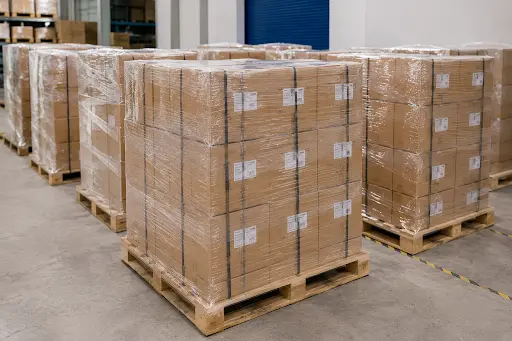
When workers wrap boxes by hand, several things tend to go wrong. Film is applied unevenly. Some boxes get too much material, some get too little. There is no standard. What that means in practice is wasted stretch film, inconsistent wrap quality, and more boxes damaged in transit because the wrap was not tight enough.

There is also the question of time. A skilled worker can wrap a certain number of boxes per hour, but that number is limited by human speed and fatigue. During peak seasons or large order rushes, you either slow down your output or bring in more staff, both of which add to costs.

And then there are mistakes. Rewrapping a box, replacing damaged goods, and handling customer complaints because a product arrived poorly packaged — these are costs that rarely show up on a single invoice but quietly add up over months.

How Wrapping Machines Cut Material Waste

One of the most immediate benefits of a box wrapping machine is how it controls the amount of material used. The machine is programmed to apply precisely the right amount of film or wrap for each box size. There is no guesswork, no over-wrapping, and no pulling extra material just to make sure the box is secure.

Studies from the packaging industry consistently show that businesses moving from manual to machine wrapping reduce their material consumption by anywhere from 20 to 30 percent. When you are ordering stretch film or wrapping material in bulk, that percentage translates into real savings on your monthly material bill.

There is another side to this as well. Less wasted material means less film going to landfill. For businesses working toward sustainability goals or responding to buyer requirements around eco-friendly practices, switching to a machine-based system is a practical step in the right direction.

Where the Labour Savings Come In

Labour is expensive, and in the packaging industry, it is one of the highest recurring costs. A box wrapping machine does not eliminate your workforce, but it does allow your team to work more productively.

One machine can typically handle the output that would otherwise require several workers to manage manually. Your team shifts away from the physically repetitive work of wrapping and moves toward quality control, logistics coordination, or operating the machine itself. You get the same output, or more, with fewer people assigned to wrapping tasks.

This also reduces dependence on seasonal labour. Many businesses ramp up manual packaging teams during busy periods and then face the challenge of managing that workforce when demand eases. A machine runs at consistent speed regardless of the season.

The long-term savings are significant. Industry data shows that automated packaging systems can reduce labour costs by 40 to 60 percent in the wrapping stage alone. For factories running multiple shifts, the return on investment from a single machine can often be recovered within a year or less.

Consistency That Manual Work Cannot Match

There is something a machine does that even the most experienced human wrapper cannot reliably deliver: it wraps every single box the same way.

This consistency matters more than most people realise. When boxes are wrapped uniformly, they stack better, store more efficiently, and survive transit more reliably. The wrap tension is the same on every unit. The film overlap is the same. The seal is always secure.

For businesses exporting garments or goods internationally, this level of consistency is not optional. Buyers and logistics partners expect packaging to meet specific standards. A box that is poorly wrapped or unevenly secured can lead to damaged goods, claims, and ultimately, lost business.

A box wrapping machine takes human variability out of the equation. What comes off the machine is predictable, professional, and ready to ship.

Faster Output Without Compromising Quality

Speed is another area where machines outperform manual processes. High-quality box wrapping machines can process dozens of units per hour, far beyond what a team of workers can achieve doing the same task manually.

This matters when orders need to go out quickly. When a large order lands and the dispatch deadline is tight, your packaging line should not be the bottleneck. A machine keeps pace with production, meaning your team spends less time waiting on packaging to catch up with the rest of the process.

Faster wrapping also means faster order fulfilment, which improves delivery timelines and keeps customers satisfied. In competitive markets, that reliability is worth more than many businesses give it credit for.

Why Real Packers Is a Trusted Box Wrapping Machine Supplier

Choosing the right machine matters as much as the decision to automate. Real Packers is a recognised box wrapping machine supplier with deep experience in the packaging industry. Their machines are built to handle the demands of garment manufacturing units, retail packaging operations, and export-focused businesses that need consistent, reliable performance across high volumes.

What sets Real Packers apart as a box wrapping machine supplier is not just the equipment itself but the understanding that comes from working closely with businesses that package for a living. The machines are designed to be practical, easy to operate, and built to reduce exactly the problems that manual wrapping creates.

What Makes Real Packers the Right Partner for Your Packaging Needs

Real Packers has been in the packaging industry since 1997, which means decades of practical knowledge behind every product and recommendation. As both a manufacturer and a box wrapping machine supplier, Real Packers understands what factories and packaging units actually need, not just in terms of equipment, but in terms of long-term efficiency.

Their range covers businesses of different sizes and production volumes. Whether you are running a mid-sized garment factory or a high-output logistics operation, Real Packers offers wrapping solutions that fit your operation without unnecessary complexity.

The combination of quality machinery, industry expertise, and dependable after-sale support makes Real Packers a practical choice for businesses that are ready to move away from manual wrapping and invest in a packaging process that actually works.

Conclusion

A box wrapping machine is not just a piece of equipment. It is a decision to stop losing money on wasted material, inconsistent wrapping, and labour costs that grow every year without any corresponding improvement in output quality.

The benefits are clear. Less material waste, lower labour spend, better consistency, faster throughput, and packaging that meets the standards your buyers and logistics partners expect. These are not small gains. Over months and years, they add up to a meaningful improvement in how your business operates.

If you are ready to make that shift, working with a trusted box wrapping machine supplier like Real Packers gives you access to the right equipment backed by real packaging expertise. The investment pays for itself, and the results show up every single day on your packaging floor.

BOPP Bags vs PP Bags: Which Is the Right Choice for Your Garment Packaging?

Reliable BOPP Bags Manufacturer for Bulk Supply & Custom Printing

Introduction

When it comes to garment packaging, choosing the right polybag is not just about wrapping a product. It is about protecting your garments, presenting your brand professionally, and making a strong first impression on your buyer or end customer. Two of the most widely used packaging materials in the textile and apparel industry are PP Bags (Polypropylene Bags) and BOPP Bags (Biaxially Oriented Polypropylene Bags). Both are trusted, durable, and widely available. But they are not the same, and picking the wrong one can affect your product presentation, packaging cost, and brand value. This blog breaks down the real differences between these two bag types and helps you decide which one suits your garment business best.

What Are PP Bags?

PP Bags are made from polypropylene, a thermoplastic polymer that is known for its toughness, flexibility, and cost efficiency. These bags are typically produced through a weaving process, which gives them a strong structure capable of holding different types of garments safely. PP bags are lightweight, resistant to moisture, and offer a clean, neat appearance. They are widely used across garment units, retail stores, and textile export businesses for packaging shirts, trousers, knitwear, and other apparel products. Because of their affordable price point, PP bags are a practical choice for businesses that need high volumes of packaging without stretching the budget.

PP bags come in various sizes and thickness options measured in microns, and they can carry basic printed information like brand names, size labels, or barcodes. However, the print quality on standard PP bags is limited when compared to more advanced packaging materials. The surface has a matte finish, which gives a clean but not premium look.

What Are BOPP Bags?

BOPP stands for Biaxially Oriented Polypropylene. The term biaxially oriented means the polypropylene film is stretched in two directions during manufacturing, both lengthwise and crosswise. This process significantly improves the physical properties of the film, resulting in a bag that is stronger, clearer, and more visually appealing than a standard PP bag. BOPP bags are made by laminating this high-quality BOPP film over a woven polypropylene base, combining the structural strength of PP with the premium look of an oriented film layer.

The result is a bag with outstanding clarity, a glossy or matte finish based on your preference, and excellent printability. BOPP bags can support up to 8 to 10 color high-definition printing, making them ideal for garment brands that want their logo, brand colors, and design to stand out. They also offer superior moisture resistance and barrier protection, keeping your garments safe during storage and transit.

BOPP Bags vs PP Bags: Key Differences

Material: PP Bags are made from Polypropylene woven fabric. BOPP Bags are made from Biaxially Oriented Polypropylene film laminated over woven bases.

Clarity: PP Bags offer moderate transparency. BOPP Bags offer crystal clear, high gloss visibility.

Print Quality: PP Bags support basic and standard printing. BOPP Bags support vibrant, high-definition multi-color printing up to 10 colors.

Moisture Resistance: PP Bags offer good moisture resistance. BOPP Bags offer excellent moisture resistance due to the extra film layer.

Strength: PP Bags are strong and durable. BOPP Bags are stronger due to the biaxial stretching process.

Finish: PP Bags have a matte finish. BOPP Bags are available in both glossy and matte finish based on your choice.

Best For: PP Bags are best for bulk and standard garment packaging. BOPP Bags are best for premium and branded garment packaging.

Cost: PP Bags are budget friendly. BOPP Bags are slightly higher in cost but worth the quality they deliver.

Which Bag Is Better for Garment Packaging?

The honest answer is it depends on your product and your brand positioning. Both PP bags and BOPP bags have their place in garment packaging. The right choice comes down to what your business needs most.

Choose PP Bags if you are packaging standard garments for local distribution, your primary focus is cost efficiency, your garments do not require premium shelf presentation, and you need large volumes at a budget-friendly price. PP bags work well for innerwear, basic knitwear, school uniforms, or export consignments where the outer carton is the main branding element.

Choose BOPP Bags if you are a garment brand focused on retail shelf appeal, you export to buyers who expect high-quality branded packaging, your products are premium apparel like fashion wear, sportswear, or branded shirts, and you want your packaging to reflect the quality inside. BOPP bags make your product look premium before the customer even opens the pack.

In today’s competitive apparel market, packaging is part of the product experience. A well-printed, crystal-clear BOPP bag tells your customer that you care about quality at every level. For garment exporters in hubs like Tirupur, where buyers from Europe, the USA, and the Middle East expect consistent quality, BOPP bags have become the standard for branded packaging.

Why BOPP Bags Are the Preferred Choice for Garment Exporters

The garment export industry has very specific packaging requirements. Buyers specify everything from bag size and micron thickness to print color accuracy and barcode readability. BOPP bags meet all of these requirements with ease. Their high print quality ensures that logos and design elements reproduce exactly as intended. Their moisture barrier protects garments during long-distance shipping. Their glossy finish adds a professional, premium appearance that impresses buyers and retail customers alike.

BOPP bags also offer excellent scratch resistance, which means the printed surface stays intact even after handling, folding, and shipping. This makes them ideal for garments that go through multiple stages of packing, warehousing, and retail display. For small garment businesses scaling up, switching from plain PP bags to custom printed BOPP bags is often one of the most visible upgrades they can make to their brand image.

Why Real Packers Is Your Trusted BOPP Bags Manufacturer

Real Packers, based in the textile hub of Tirupur, Tamil Nadu, is a leading BOPP Bags Manufacturer with over two decades of experience serving garment exporters, apparel brands, and retail businesses across India and international markets. As a fully ISO and Sedex certified manufacturer, Real Packers maintains strict quality standards across every bag produced. From crystal-clear transparency to vibrant 8 to 10 color printing, every BOPP bag from Real Packers is crafted to meet your exact specifications.

As an experienced BOPP Bags Manufacturer, Real Packers offers full customization including size, micron thickness, zip lock options, print design, and finish type. Whether you need 1,000 bags or 1,00,000 bags, the team at Real Packers ensures consistent quality, competitive pricing, and on-time delivery every single time.

Get the Right Packaging Solution from Real Packers

Choosing between BOPP bags and PP bags does not have to be complicated. Real Packers helps you make the right choice based on your product type, order volume, branding requirements, and budget. As a trusted BOPP Bags Manufacturer and polypropylene bags supplier, Real Packers provides complete packaging solutions under one roof. From BOPP bags for premium garments to PP bags for bulk orders, every packaging requirement is handled with care, speed, and precision.

Visit www.realpackers.in or reach out directly to the Real Packers team to discuss your garment packaging needs and get a customized quote today.

Conclusion

Both PP bags and BOPP bags are excellent packaging materials, but they serve different purposes. PP bags are the right choice for cost-effective, high-volume, standard garment packaging. BOPP bags are the right choice when you want premium print quality, strong moisture protection, and packaging that elevates your brand. For garment businesses looking to grow, stand out on retail shelves, or impress international buyers, investing in custom printed BOPP bags is a smart and worthwhile decision. With a reliable BOPP Bags Manufacturer like Real Packers by your side, you get not just great bags but a packaging partner who understands the textile industry inside out. Make the switch today and let your packaging speak for your brand.

From Box to Bag: Packaging That Performs and Protects the Planet

Compostable Bags Supplier in India

From Box to Bag: Packaging That Performs and Protects the Planet

In today’s competitive marketplace, packaging is no longer a background function. It is a front line business decision. For manufacturers, exporters, and retailers across India, choosing the right packaging partner directly impacts product safety, brand perception, operational efficiency, and environmental compliance. Real Packers, an ISO and Sedex certified packaging manufacturer based in Tiruppur since 1997, has built its reputation on delivering exactly that. Packaging solutions that perform at scale and protect the planet at the same time.

The Modern Packaging Mandate: Performance Meets Responsibility

The packaging industry in India is undergoing a significant transformation. Consumer awareness, government regulations on single use plastics, and the demands of international buyers particularly in Europe and North America have combined to create a new standard. Packaging must be both high performing and environmentally responsible.

Businesses that continue to rely on conventional plastic packaging without a sustainability strategy are increasingly losing access to premium export markets and facing compliance challenges. At the same time, the rapid growth of ecommerce and direct to consumer shipping has made efficient and automated packaging essential.

Real Packers has responded to both these changes by building one of the most comprehensive packaging portfolios available from a single ISO certified manufacturer in South India.

Box Wrapping Machine Supplier: Powering Packaging Efficiency

One of the most common productivity challenges on a packaging floor is inconsistent and manually intensive box wrapping. Poorly wrapped boxes increase product damage during transit, slow down dispatch cycles, and lead to unnecessary material wastage.

As a leading Box Wrapping Machine Supplier, Real Packers addresses this with advanced industrial grade wrapping machines designed for precision and speed. These machines are built to handle different box sizes and shapes without requiring time consuming adjustments, which is especially useful for fulfilment centres managing multiple product categories.

The machines ensure consistent wrapping tension, reduce transit damage, and significantly improve packaging speed compared to manual processes.

Industries that benefit from these solutions include ecommerce fulfilment centres, electronics manufacturers, garment exporters handling international shipments, and FMCG producers requiring reliable high volume output. When used along with Real Packers packaging materials, businesses get a complete and integrated packaging system from a single trusted source.

Biodegradable Compostable Bags: Sustainability That Delivers

The shift toward Biodegradable Compostable Bags is no longer driven only by environmental awareness. It is now a requirement for market access. Many global fashion brands, food retailers, and export buyers expect eco certified packaging as a standard condition.

Real Packers has positioned itself at the forefront of this shift by manufacturing Biodegradable Compostable Bags that meet international decomposition standards. Unlike traditional plastic that breaks into harmful microplastics, these bags are designed to decompose within certified composting conditions, leaving behind safe and natural residue.

These Biodegradable Compostable Bags are available in custom sizes with high quality multi colour printing, allowing brands to maintain strong visual identity while staying environmentally responsible.

Key Features:

Fully decomposable and safe for soil and water

Available in compostable ziplock formats for resealable use

Custom printed with up to 10 colours

Suitable for bulk orders and export requirements

Meets global sustainability compliance standards

Poly Propylene Bags Manufacturer: Strength for Every Industry

As a trusted Poly Propylene Bags Manufacturer, Real Packers produces Poly Propylene Bags for a wide range of applications, from garment packaging to industrial usage. Polypropylene offers excellent strength, moisture resistance, and durability, making it one of the most reliable packaging materials available.

Real Packers specialises in customised Poly Propylene Bags for garment exporters, providing solutions that protect products during transit while enhancing brand presentation through quality printing.

These Poly Propylene Bags are available in plain, frosted, and printed formats, with complete flexibility in size and design. This makes them suitable for businesses of all scales.

BOPP Bags Manufacturer: Where Clarity Meets Brand Impact

For brands that rely on visual appeal, BOPP Bags offer superior presentation. As a reliable BOPP Bags Manufacturer, Real Packers produces BOPP Bags that deliver excellent clarity, strong structure, and high quality print output.

The transparency of BOPP Bags allows customers to clearly see the product inside, which is especially important in retail environments. Combined with advanced multi colour printing capabilities, these bags help brands stand out on shelves.

These BOPP Bags are widely used in garment packaging, gifting products, food packaging, and consumer goods where appearance plays a key role in buying decisions.

Bags for Garments: Packaging Built for the Apparel Industry

Based in Tiruppur, the knitwear hub of India, Real Packers has developed deep expertise in Bags for Garments over the years. Their range of Bags for Garments is designed to meet the specific needs of the apparel industry.

Frosted Ziplock Bags

Frosted Ziplock Bags offer a premium look with secure closure, ideal for fashion brands that want both protection and presentation.

Slider Zipper Bags

Slider Zipper Bags provide easy handling and are preferred for high volume export packaging due to their speed and convenience.

LDPE Garment Bags

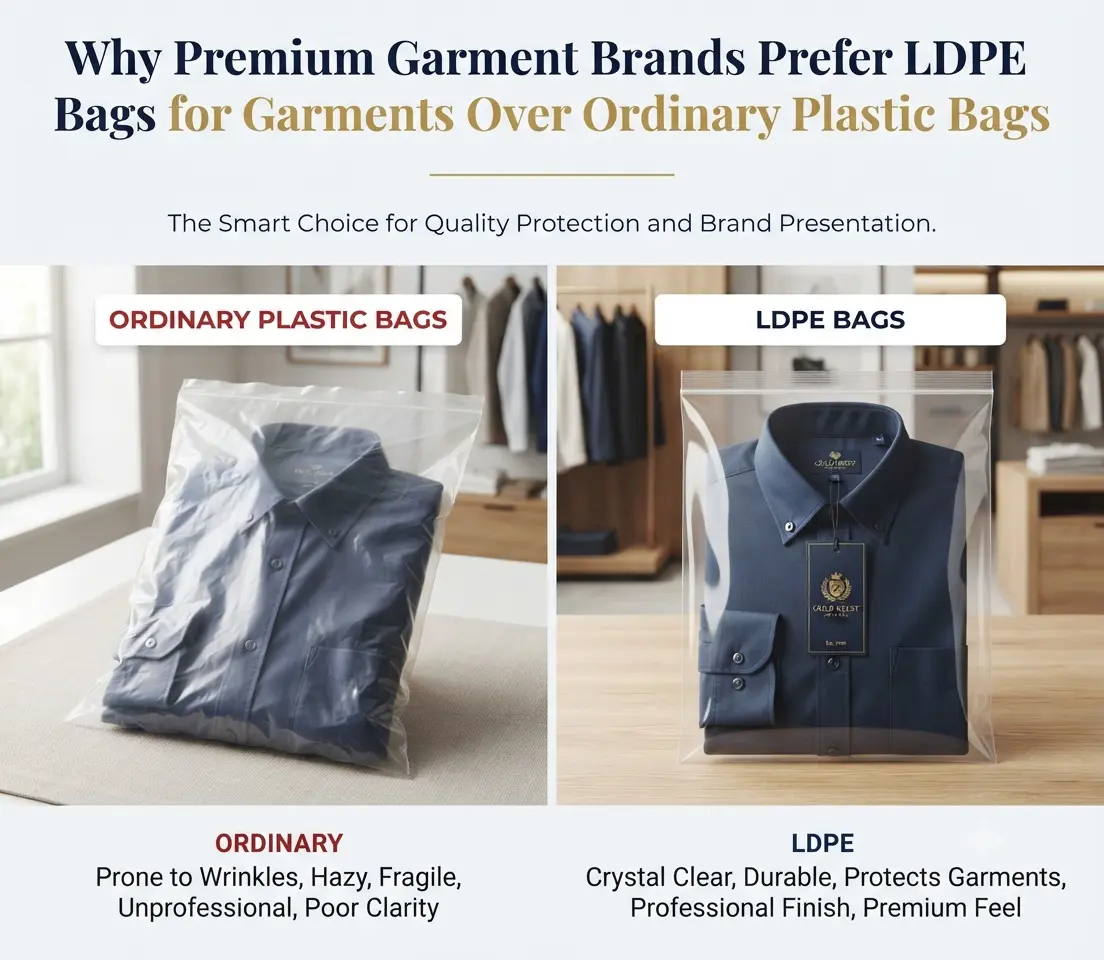
LDPE Garment Bags are lightweight and transparent, designed to protect clothing during shipping while allowing easy identification.

Recycled Poly Bags

Recycled Poly Bags are made from 100 percent recycled material, supporting sustainable supply chains without compromising on strength or quality.

Why One Vendor for All Your Packaging Needs

Managing multiple packaging suppliers often leads to inconsistent quality, delays, and increased operational complexity. Real Packers simplifies this by offering a complete packaging solution under one roof.

From machinery to materials and customised printing, everything is handled by a single experienced provider.

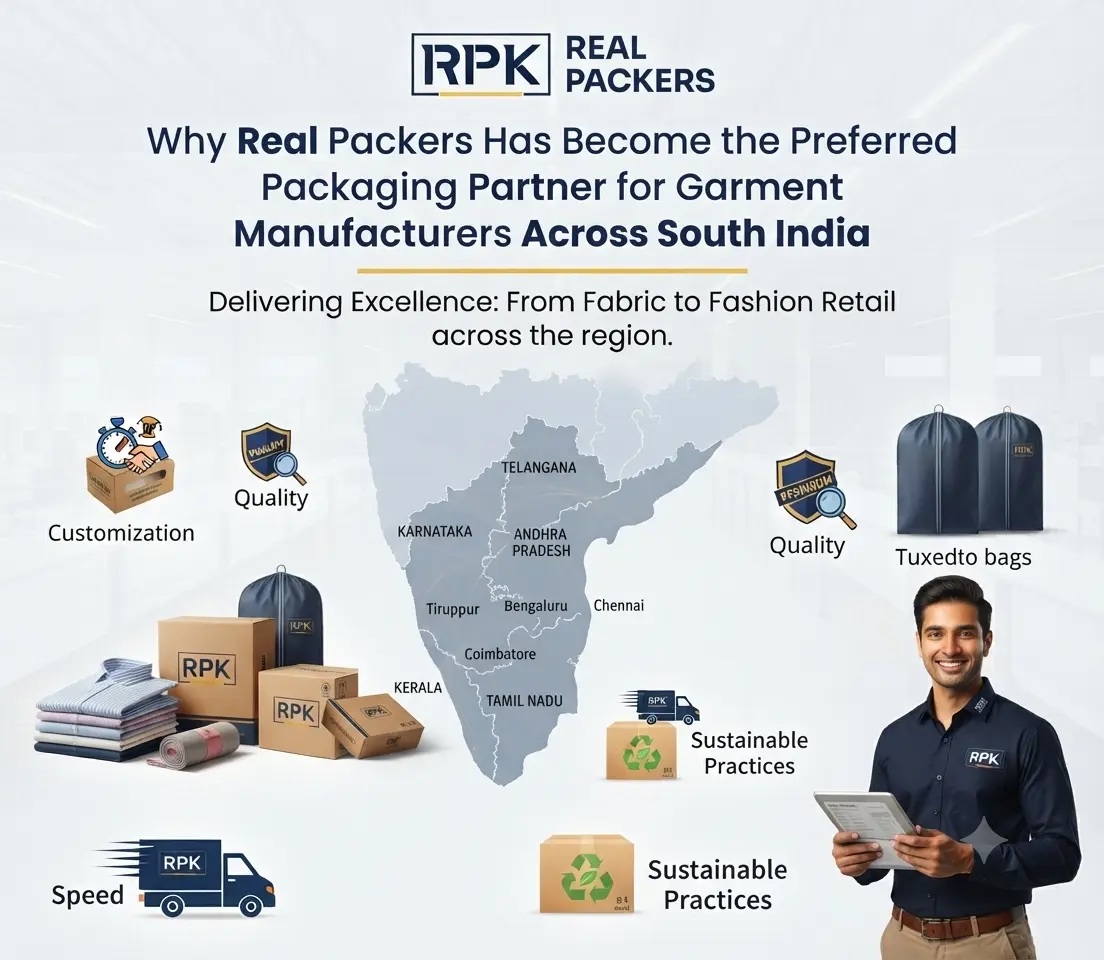
With ISO certification and Sedex compliance, Real Packers meets international quality and ethical standards. Their competitive pricing, quick delivery, and customisation capabilities make them a preferred choice for businesses across Chennai, Tiruppur, and Bangalore.

Conclusion: Packaging That Protects More Than Products

The shift from traditional packaging to smarter and more sustainable solutions is already underway. Businesses that invest in efficient packaging systems and eco-friendly materials are building stronger, future ready supply chains.

By combining advanced machinery from a Box Wrapping Machine Supplier with sustainable options like Biodegradable Compostable Bags along with specialised products such as BOPP Bags, Poly Propylene Bags, and Bags for Garments, companies can achieve performance, compliance, and brand value together.

Real Packers has been delivering this integrated packaging approach since 1997, helping businesses move toward packaging that protects not just products, but the planet.