


Why LDPE Garment Bags Tear, Sweat & Fail During Bulk Export Shipping (And How to Fix It)
Published: September 14, 2026 | 8 Min Read
Why LDPE Garment Bags Tear, Sweat & Fail During Bulk Export Shipping (And How to Fix It)
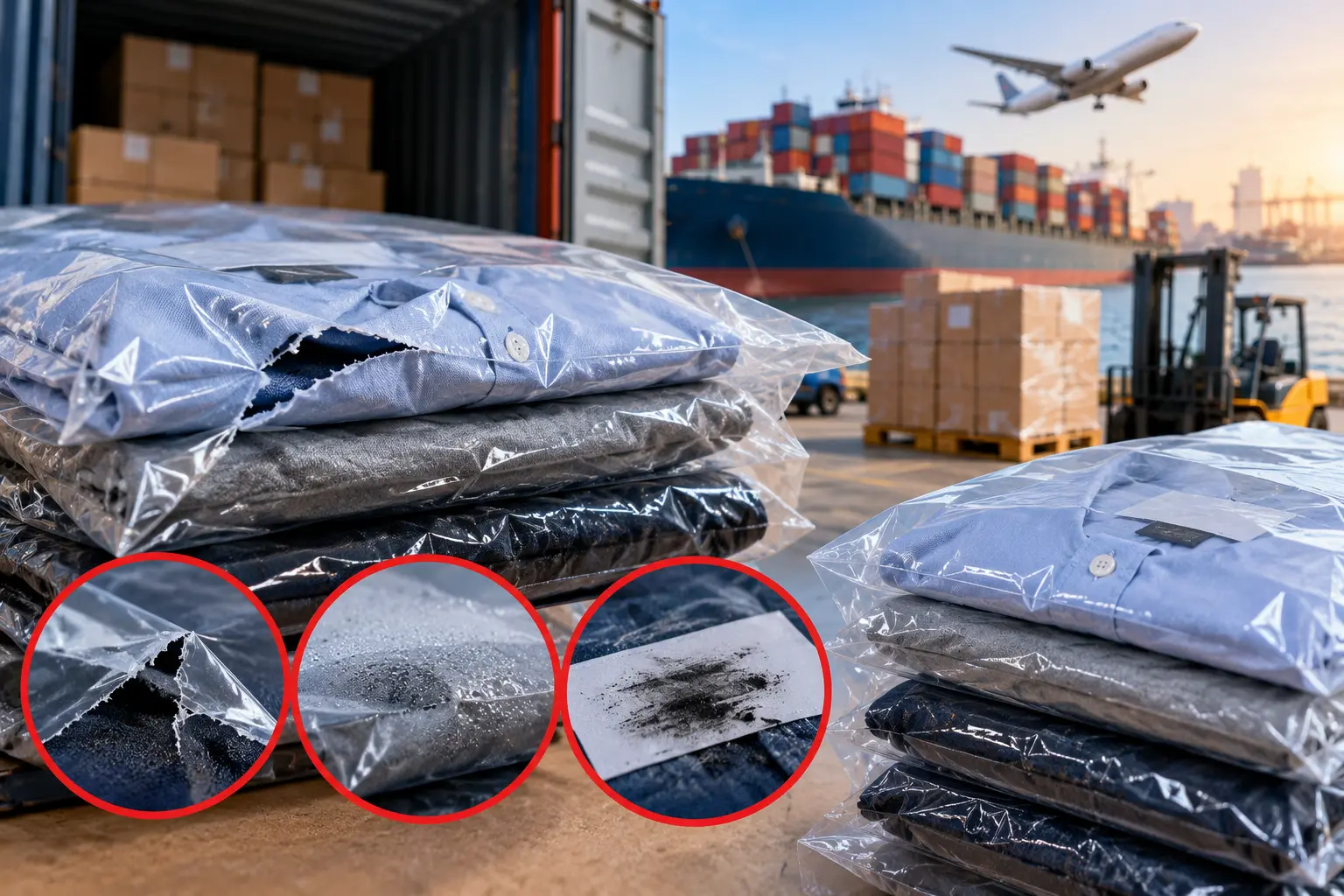
If you’ve had a buyer come back with photos of torn poly bags, foggy condensation inside sealed packs, or smudged labels on an otherwise perfect shipment, the problem usually isn’t your courier. It’s the bag.
Garment exporters lose time and money reworking shipments that fail not because of rough handling, but because the LDPE bag specification was wrong for the job in the first place. Here’s what actually causes it and the exact specs that fix it.
5 Reasons Garment Poly Bags Fail in Transit
- Under-spec micron thickness: A bag that feels fine on the table can still be too thin for stacked, palletized transit. Thin film tears at pressure points, typically the corners and seams, long before it reaches the buyer’s warehouse.
- Poor heat-seal integrity: If the seal isn’t consistently bonded across its full width, it becomes the weakest point on the bag. Seams split under load, and garments spill out mid-transit.
- Non-breathable film in humid transit: This is the “sweating” complaint. Garments packed warm or shipped through humid ports can generate internal condensation inside a fully sealed, non-breathable bag, leading to mildew spots that surface only after the buyer opens the carton.
- Static cling damaging prints and labels: Poor-quality film builds static charge, which pulls the bag tight against printed labels or heat-transfer prints and can smudge or lift them before the garment ever leaves the factory.
- Inconsistent gusset sizing: A gusset that’s slightly undersized forces the bag to overstretch when filled, weakening the film exactly where it needs to be strongest.
The Fix: Choosing the Right LDPE Specification
None of the above requires switching materials; it requires specifying LDPE correctly for the category you’re packing.
Micron Thickness by Garment Weight
- Light knitwear, T-shirts, innerwear: 40–50 micron
- Mid-weight garments, shirts, trousers: 50–75 micron
- Denim, jackets, outerwear: 75–100+ micron
Gusset and Seal Standards to Specify to Your Supplier
- Gusset width sized to the folded garment, not the flattened bag.
- Seal width and seal strength tested to hold under stacking load, not just visual inspection.
Why in-house manufacturing matters here: a trader reselling bagged stock can’t adjust micron or gusset per order; you get whatever is in inventory. An in-house manufacturer can run your exact spec on the same production line, which is the difference between a bag that’s “close enough” and one that’s built for your product.
Real Packers manufactures export-grade LDPE bags for garments to the correct micron and gusset specification for each garment category, rather than shipping a one-size-fits-all stock bag.
What Export-Quality LDPE Packaging Actually Looks Like
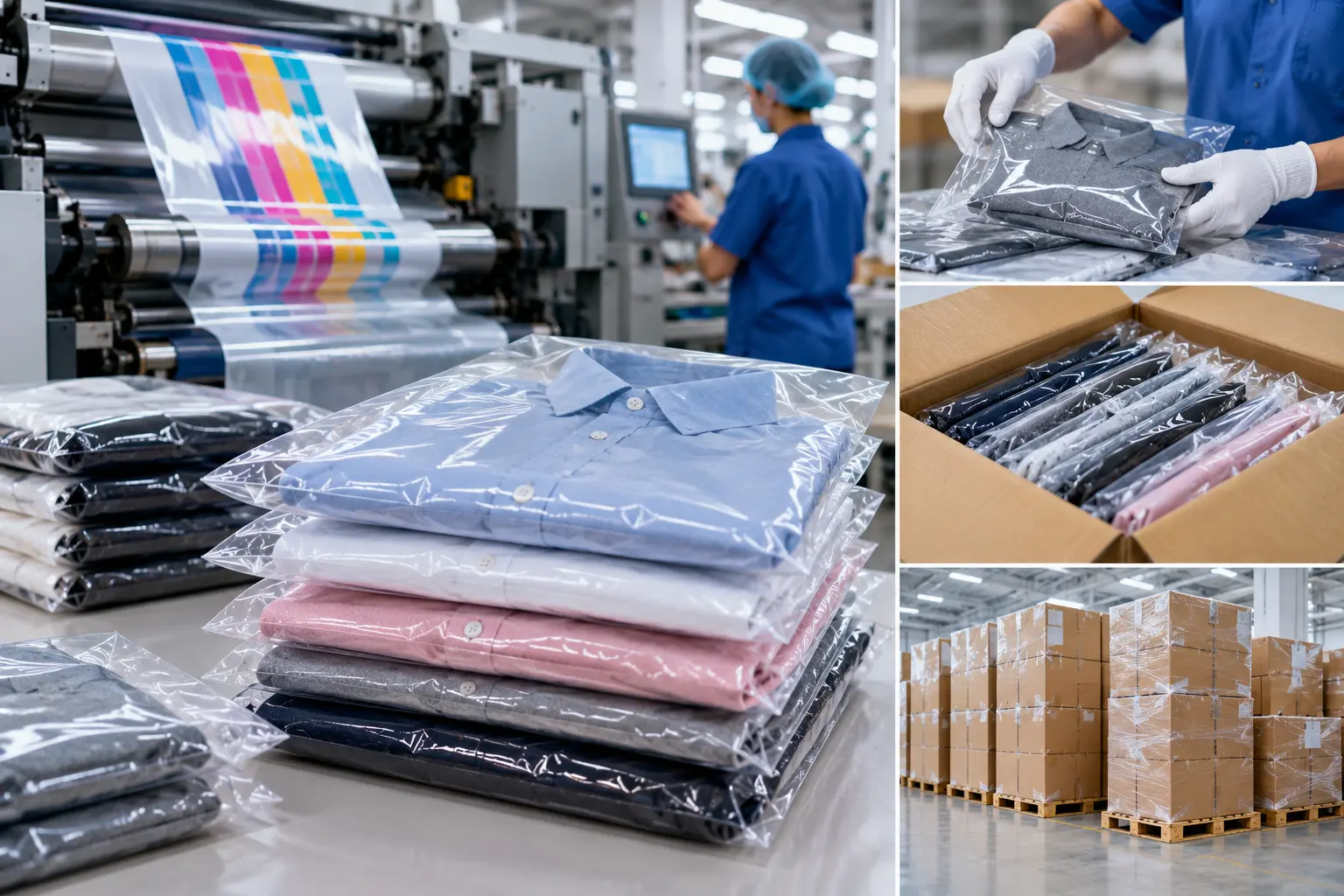
Specification is only half the picture; consistency is the other half. That’s where certification becomes a useful proxy for quality control.
- ISO-certified manufacturing: For process consistency batch to batch.
- Sedex certification: For verified ethical and social compliance, increasingly a buyer requirement in its own right.
- Pollution Board certification: Confirming environmental compliance at the manufacturing facility.
- Automated cutting and up to 12-colour printing: So buyer compliance codes, barcodes, and branding print cleanly and consistently at volume, with no more smudged labels from inconsistent static or ink lay.
At scale (up to 3 lakh pieces per day), automated production also means the 500th bag in a run matches the same spec as the first, which manual or semi-automated lines can’t guarantee.
FAQs
Most export garment packing uses 40–75 micron LDPE. Heavier categories like denim or outerwear typically need 100 micron or above for adequate tear resistance under stacked, long-haul transit.
Yes. Automated printing infrastructure supports up to 12-colour custom printing, so buyer compliance codes, barcodes, and branding can be printed directly onto the bag rather than applied as a separate label.
Condensation is usually a film and packing-temperature issue rather than a sealing issue. Ensuring garments are fully cooled before bagging, and specifying film with the correct breathability for your shipping route’s humidity, both reduce internal “sweating.”
Get Export-Ready LDPE Packaging
If you’re troubleshooting repeat shipment damage, the fastest fix is a spec review, not a new courier. Send us your garment category and current bag specification, and we’ll recommend the correct micron, gusset, and seal standard for your product.