


Manual Wrapping vs Box Wrapping Machine: A Cost Comparison for Garment Factories
Every garment factory has a packaging floor. And on that floor, one question decides how much money leaves your business quietly every single month: are your workers still wrapping boxes by hand?
Manual wrapping feels familiar. It requires no upfront investment. It seems controllable. But when you actually sit down and count what it costs — in wages, in wasted material, in time, in errors — the numbers tell a very different story.
This blog breaks down the real cost difference between manual wrapping and machine wrapping, specifically for garment factories. No vague comparisons. Just the actual areas where money is being spent, saved, or quietly lost.
What Manual Wrapping Actually Costs a Garment Factory
Most factory managers think of manual wrapping as a low-cost option because there is no machine purchase involved. But the cost of manual wrapping is not in the equipment. It is in the people, the time, and the material.
In a garment factory handling medium to large order volumes, the packaging section typically needs multiple workers dedicated to wrapping boxes before dispatch. Each worker can wrap a fixed number of boxes per shift, and that number is limited by human speed and endurance.
Now consider what happens during peak export seasons. Order volumes go up. The wrapping team cannot keep pace. You either bring in additional workers, ask existing staff to work overtime, or your dispatch gets delayed. Every one of those outcomes adds to your cost.
Labour costs in the Indian garment and textile sector have been rising steadily. Research from the International Labour Organization shows that wages in the sector grew at roughly 5 percent per year between 2015 and 2022. That trend has continued. When you employ several people just for wrapping work across multiple shifts, that wage bill grows every year without adding any new value to your product.
On top of wages, there is the cost of materials. When workers wrap boxes by hand, they estimate how much film or stretch wrap to use. That estimation is never precise. Some boxes get too much. Some get too little. The result is a quiet but consistent waste of packaging material with every single shift, every single day.
Where Machine Wrapping Changes the Math
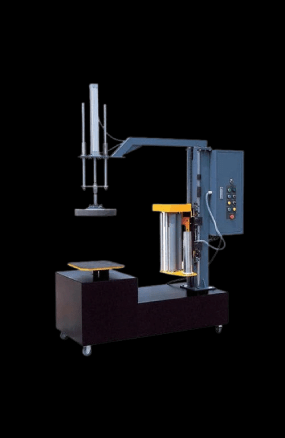
A box wrapping machine does not just wrap faster. It fundamentally changes the economics of your packaging floor.
The most direct saving is in material usage. A wrapping machine is programmed to apply an exact amount of film for each box size. There is no guesswork. Industry data shows that switching from manual to machine wrapping reduces packaging material consumption by 20 to 30 percent on average. For a factory placing large monthly orders on stretch film or polywrap, that percentage translates into a real and measurable reduction in your supply costs every month.
The second saving is in labour. A single machine can handle the wrapping output that would otherwise require multiple workers. That does not mean you need to reduce your workforce, but it does mean those workers can be reassigned to tasks that actually need human judgment, like quality checking, sorting, labelling, or coordination.
Automated packaging systems have been shown to reduce labour costs in the wrapping stage by 40 to 60 percent. For a factory running two or three shifts, the ongoing monthly savings from reduced wrapping labour alone can often justify the machine cost within a year.
Speed and Order Fulfilment: The Hidden Difference
There is a cost that does not appear in any invoice but affects your business directly. That is the cost of slow dispatch.
When manual wrapping cannot keep up with production output, boxes pile up at the packaging stage. Shipments that could go out on time get delayed. International buyers, especially those operating on tight retail calendar schedules, take delayed shipments seriously. Repeat business depends on whether your delivery timelines are reliable.
A box wrapping machine runs at a consistent speed regardless of the time of day or the stage of the shift. It does not slow down after six hours. It does not make faster or slower wraps depending on fatigue. The output is steady and predictable.
For garment exporters shipping to buyers across Europe, the Middle East, or the United States, that reliability in dispatch timing is not a small thing. It is part of what builds a long-term relationship with a buyer.
Quality of Wrap and What It Means for Transit Damage
Manual wrapping produces inconsistent results. One worker may wrap a box tightly. Another may leave gaps. A third may use excess material that bunches up and weakens the pack. These variations are not about the skill of the workers. They are a natural outcome of any human process done repeatedly at speed.
Inconsistent wrapping leads to boxes that shift during transit. Products inside get damaged. When a garment shipment arrives at a buyer’s warehouse and the boxes are visibly poorly wrapped or damaged, it creates a problem beyond the immediate order. It affects how your factory is perceived as a packaging partner.
Machine wrapping removes that inconsistency. Every box that comes off a wrapping machine is treated the same way. The tension is the same. The coverage is the same. The seal is the same. For factories exporting garments where presentation and packaging quality are part of the buyer’s assessment criteria, this consistency has direct value.
The Cost Comparison: A Practical Summary
To make this concrete, here is how the two approaches compare across the key cost areas:
Labour spend is higher with manual wrapping because you need more people to achieve the same output. Machine wrapping reduces the number of workers needed on the packaging floor directly.
Material costs are higher with manual wrapping because of overuse and inconsistent application. Machines use the minimum required amount for each box and do not deviate from that.
Error and rework costs are a reality with manual wrapping. Poorly wrapped boxes that need to be redone use extra material and extra time. Machines do not produce wrapping errors.
Overtime and seasonal labour costs go up with manual wrapping during peak order periods. A machine handles peak volume without additional headcount.
Transit damage and related claims are more common when wrapping quality is inconsistent. Machine wrapping reduces that risk and the costs that come with it.
When you add these up over a month and then across a year, the cost gap between manual and machine wrapping becomes significant. The machine involves an upfront investment, but that investment is recovered through ongoing savings that do not stop once the machine is paid for.
Why Real Packers Understands This Problem from the Inside
Real Packers is not a general packaging equipment vendor. As a box wrapping machine supplier with more than two decades of experience working directly with garment factories and textile businesses, Real Packers understands precisely where the cost pressure sits in a production environment.
The machines supplied by Real Packers are designed for the specific demands of factories that ship garments in bulk, where output volumes are high, timelines are tight, and packaging consistency directly affects buyer relationships. As a box wrapping machine supplier, Real Packers helps factories move from a wrapping process that costs money quietly every month to one that saves it just as quietly.
Choosing a Box Wrapping Machine Supplier That Fits Your Factory
Not every wrapping machine suits every factory. The right machine depends on your order volumes, your dispatch frequency, your floor space, and the type of boxes you are wrapping.
Real Packers, as an experienced box wrapping machine supplier, offers guidance on which machine configuration suits your operation before you make any commitment. Their support does not end at delivery. It includes setup, operator training, and after-sale assistance so that your team can run the machine with confidence from day one.
For garment factories in Chennai, Tirupur, Bangalore, and beyond, Real Packers provides wrapping solutions that are built around the realities of the Indian export garment business, not generic industrial templates.
Conclusion
The cost of manual wrapping in a garment factory is not visible on a single day. It shows up gradually, in wages, in wasted material, in overtime, in delayed shipments, and in inconsistent packaging that occasionally leads to damaged goods or buyer dissatisfaction.
A box wrapping machine replaces all of those variables with one predictable, controllable process. The savings are real, they are ongoing, and they grow every year as labour costs continue to rise.
If your packaging floor is still relying on hand wrapping to handle your dispatch volumes, the comparison above makes a clear case for reviewing that decision. And when you are ready to make the change, working with a trusted box wrapping machine supplier like Real Packers gives you the right machine, the right guidance, and the right support to make that change count.