


LDPE vs PP Bags for Garments: Which Packaging Material Is Better?
Published: August 17, 2026 | 8 Min Read
LDPE vs PP Bags for Garments: Which Packaging Material Is Better?
Choosing the right packaging material quietly shapes how a garment brand is perceived before the customer even touches the product. Many manufacturers still order “any poly bag” without realizing that the film type, LDPE or PP, changes how clothes look on the shelf, how well they survive transit, and how much the packaging costs per unit.
If you’re weighing LDPE bags for garments against PP bags for garments, this guide breaks down the real differences so you can match the material to your product instead of guessing.
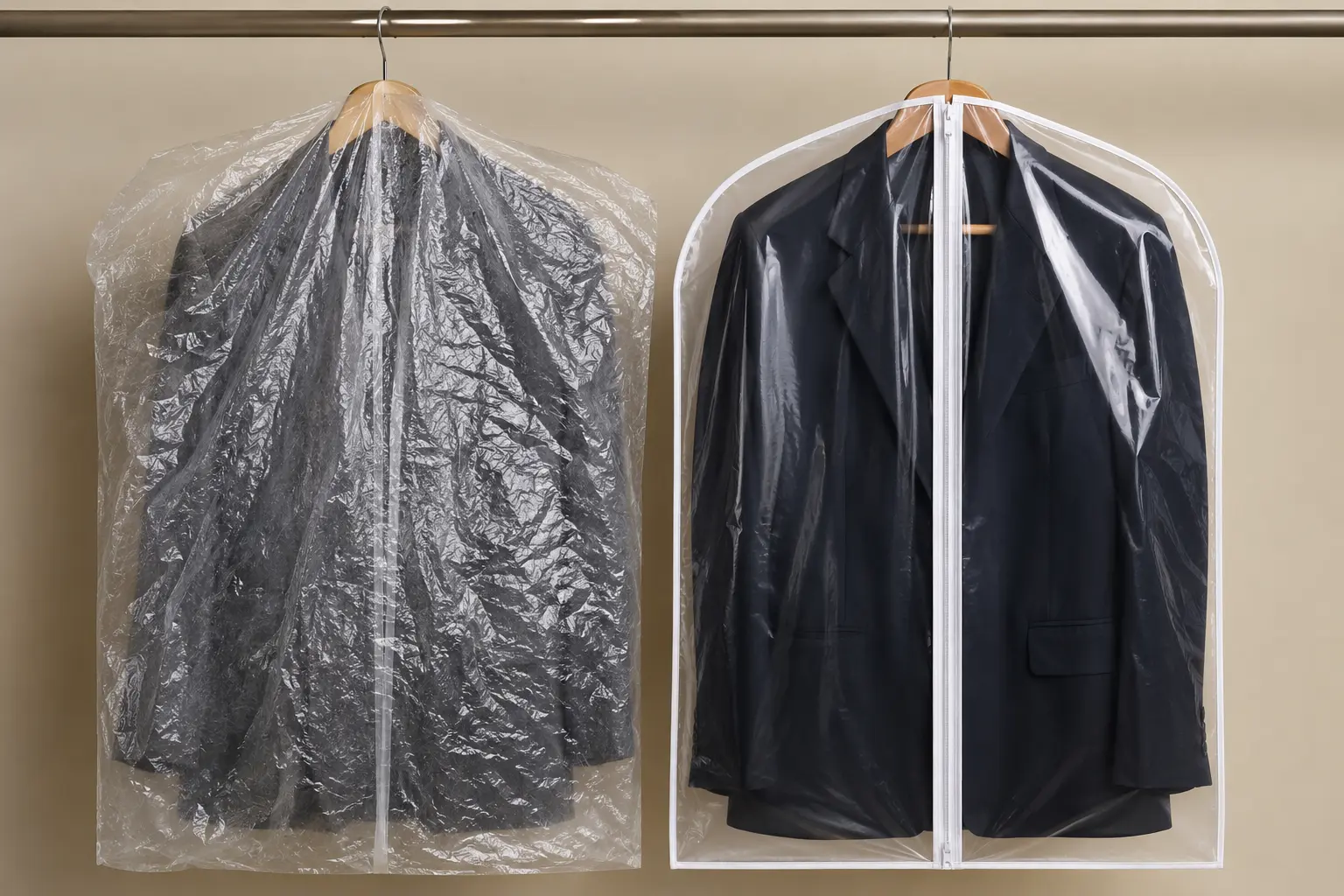
What Are LDPE Bags for Garments?
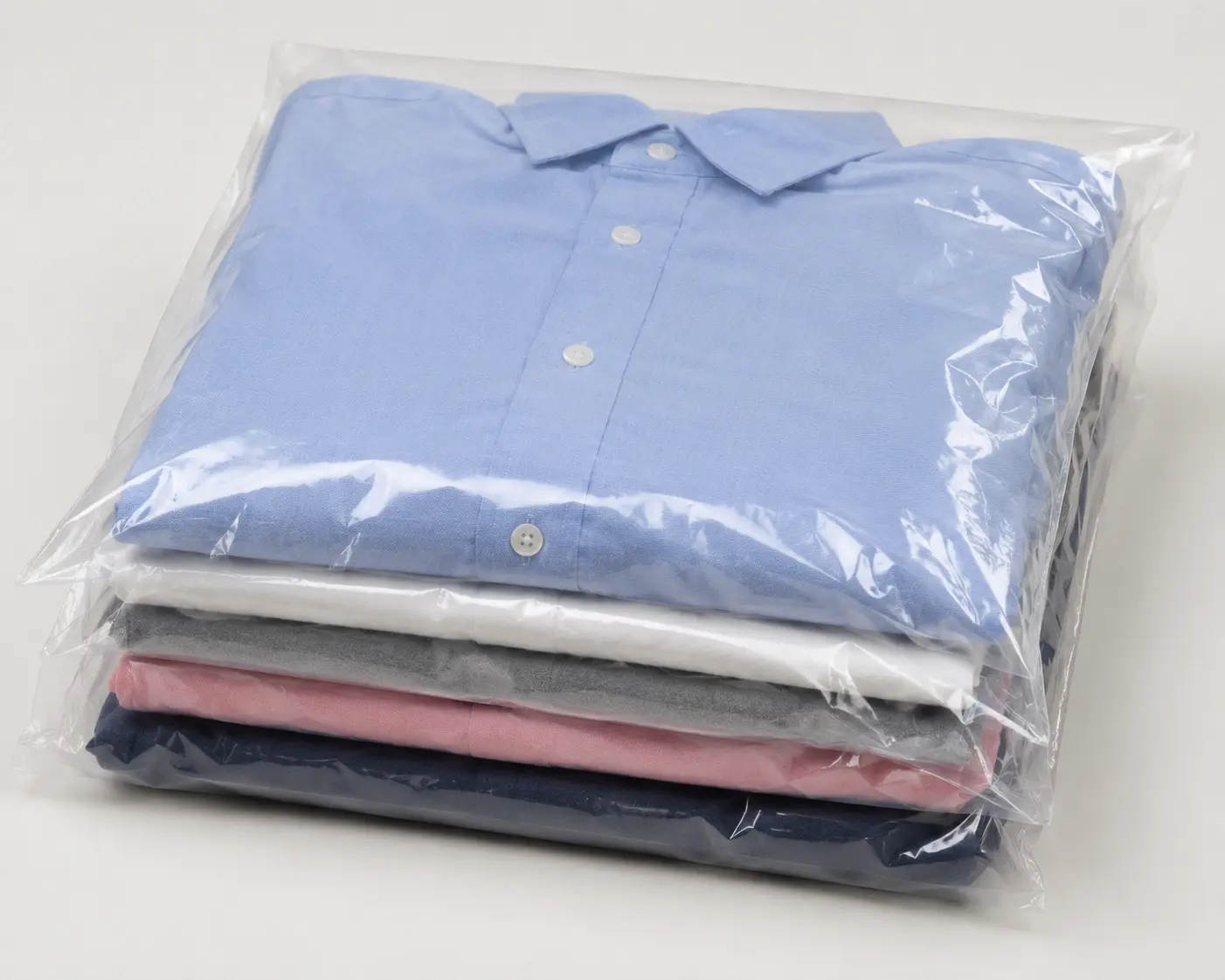
LDPE (Low-Density Polyethylene) is a soft, stretchy plastic film widely used across retail and textile packaging. Its loosely branched polymer structure is what gives it that pliable, slightly matte-to-clear feel; the film gives way under pressure instead of cracking, which is why it’s a familiar, forgiving choice for everyday apparel packs.
Key Properties of LDPE Garment Bags
- Soft, flexible feel that moulds around folded garments without stiff creasing.
- Good transparency for product visibility on retail racks.
- Resistant to moisture, making it suitable for humid storage conditions.
- Absorbs shock and minor impact well since the film stretches rather than tears at once.
- Lower material cost compared to PP, which matters at high order volumes.
Common Use Cases
LDPE works well for folded shirts, casual wear, in-store retail packs, and bulk garment dispatch where cost efficiency matters more than a premium unboxing feel. It’s also a practical choice when garments will be handled frequently by staff or customers, since the film resists puncturing from repeated flexing.
Real Packers’ LDPE Bags are available with custom sizing and printing for apparel packaging needs.
What Are Polypropylene (PP) Bags for Garments?
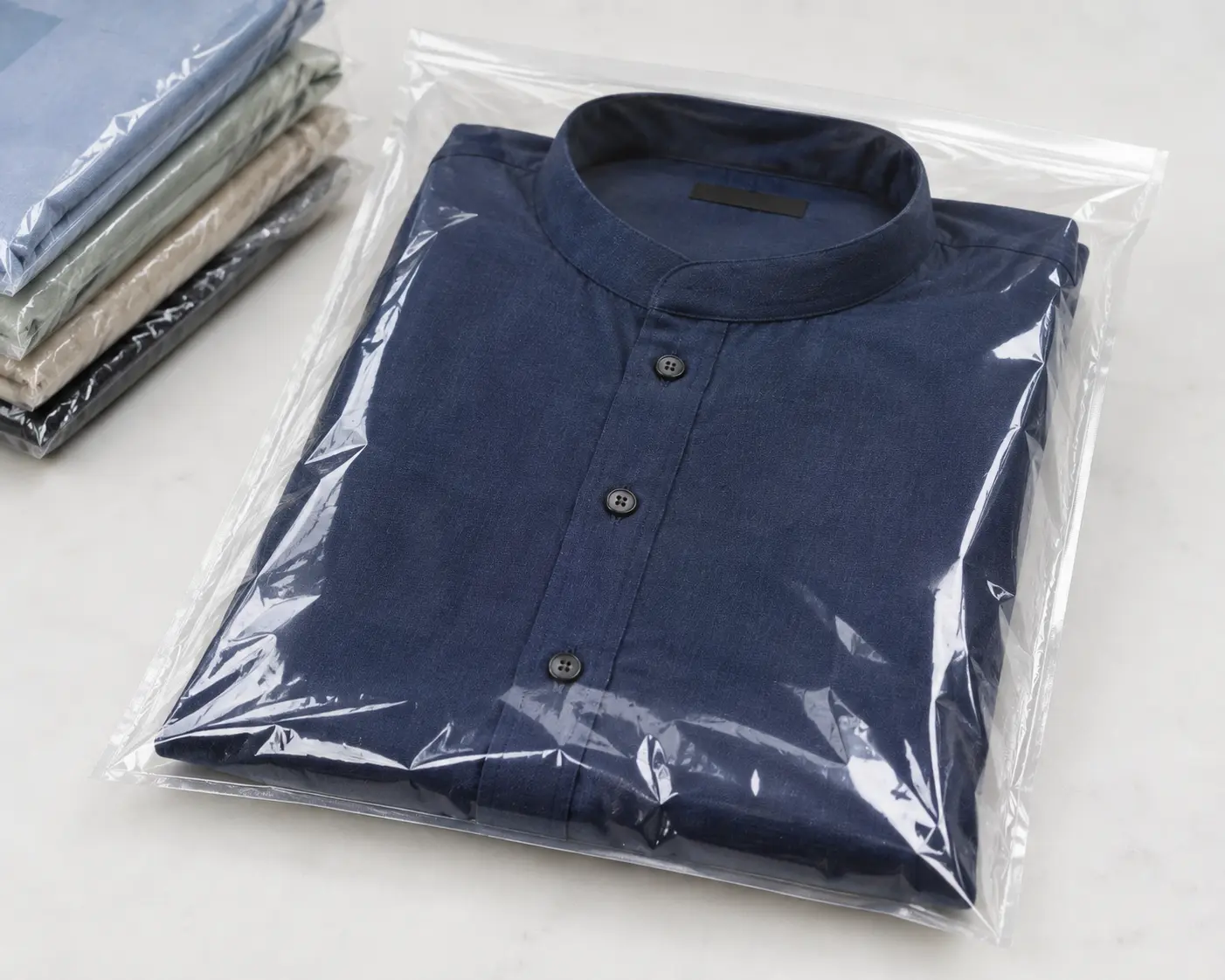
PP (Polypropylene) is a stiffer plastic film known for its crisp, glossy finish. Its more rigid molecular structure means it holds its shape rather than draping loosely, giving packaged garments a structured, premium appearance, which is why export-focused and boutique brands often prefer it over LDPE.
Key Properties of PP Garment Bags
- High clarity and glossy shine that enhances shelf appeal and perceived product value.
- Stronger resistance to tearing and puncture under stress, useful when bags pass through multiple handlers.
- Crisper structure that holds its shape during stacking and warehouse storage.
- Lower moisture absorption, which helps during long-distance or humid-climate shipping.
Common Use Cases
PP bags are widely used for export consignments, premium boutique labels, and garments that pass through several handling points: sorting, palletizing, freight, and final delivery before reaching the customer. Explore Real Packers’ Polypropylene Bags range for export-grade garment packaging.
LDPE vs PP Bags — Side-by-Side Comparison
| Feature | LDPE Bags | PP Bags |
|---|---|---|
| Transparency | Good, slightly soft clarity | Excellent, glossy clarity |
| Flexibility | Highly flexible, soft feel | Stiffer, holds shape |
| Tear Resistance | Moderate | High |
| Moisture Protection | Good | Very good |
| Cost | Lower | Slightly higher |
| Best For | Everyday, bulk packing | Premium, export packaging |
| Recyclability | Recyclable (LDPE #4) | Recyclable (PP #5) |
Which One Should You Choose for Your Garment Brand?
Choose LDPE if:
- You’re packing everyday or bulk garment orders.
- Cost per unit is a priority.
- You want a soft, flexible bag for folded apparel.
Choose PP if:
- You’re shipping garments for export or long-distance transit.
- Brand presentation and shelf appeal matter.
- You need higher tear resistance for rough handling.
Quick Decision Checklist
Consider your budget, garment type, shipping distance, and how important branding and presentation are at the point of sale. Brands often use LDPE for domestic bulk packs and switch to PP for export or premium lines.See our detailed breakdown in 7 Things Garment Exporters Should Check Before Buying Polypropylene Bags and Why Premium Garment Brands Prefer LDPE Bags .
Signs You May Be Using the Wrong Bag
- Garments arriving creased or damaged in transit → PP’s rigidity and puncture resistance may solve this better than LDPE.
- Packaging feels flimsy on a premium product line → PP’s gloss and structure can lift perceived value.
- Packaging costs eating into margins on high-volume basics → LDPE’s lower cost per unit may be the more sustainable fit.
- Bags tearing during repeated in-store handling → LDPE’s stretch-before-tear behavior can often outperform PP in repeated flexing situations.
People Also Ask
Neither is universally better. LDPE suits cost-conscious, everyday packaging, while PP suits premium or export garments needing extra strength and gloss.
LDPE is softer, more flexible, and less expensive. PP is stiffer, glossier, and more tear-resistant, making it better for demanding logistics.
Generally, yes. PP’s higher strength and finish quality come at a slightly higher per-unit cost than LDPE.
Yes, LDPE uses resin code #4 and is recyclable through many plastic recycling streams, although acceptance varies by local recycling facility.
PP is generally preferred for exports because of its higher tear resistance and ability to withstand extended handling and transit.
Why Choose Real Packers for Garment Packaging Bags?
Real Packers has manufactured polybags since 1997, moving from trading to in-house production by 2000. With facilities across Tirupur, Chennai, and Bangalore, and custom printing capability up to 8–10 colors, Real Packers supplies both LDPE and PP garment packaging tailored to your brand’s needs so you’re not locked into one material if your product line spans both everyday and premium garments. Learn more About Us or see our Quality Standards .
Conclusion
There’s no single winner between LDPE and PP garment bags; the right choice depends on your priorities. LDPE offers flexibility and cost savings for everyday packing, while PP delivers strength and a premium finish for export or boutique lines.Matching the material to your garment type and shipping needs ensures your packaging protects the product and reflects your brand quality.