


How to Standardize Garment Packaging Specifications for Bulk Dispatch
Bulk Garment Packaging Specification Guide
How to Standardize Garment Packaging Specifications for Bulk Dispatch
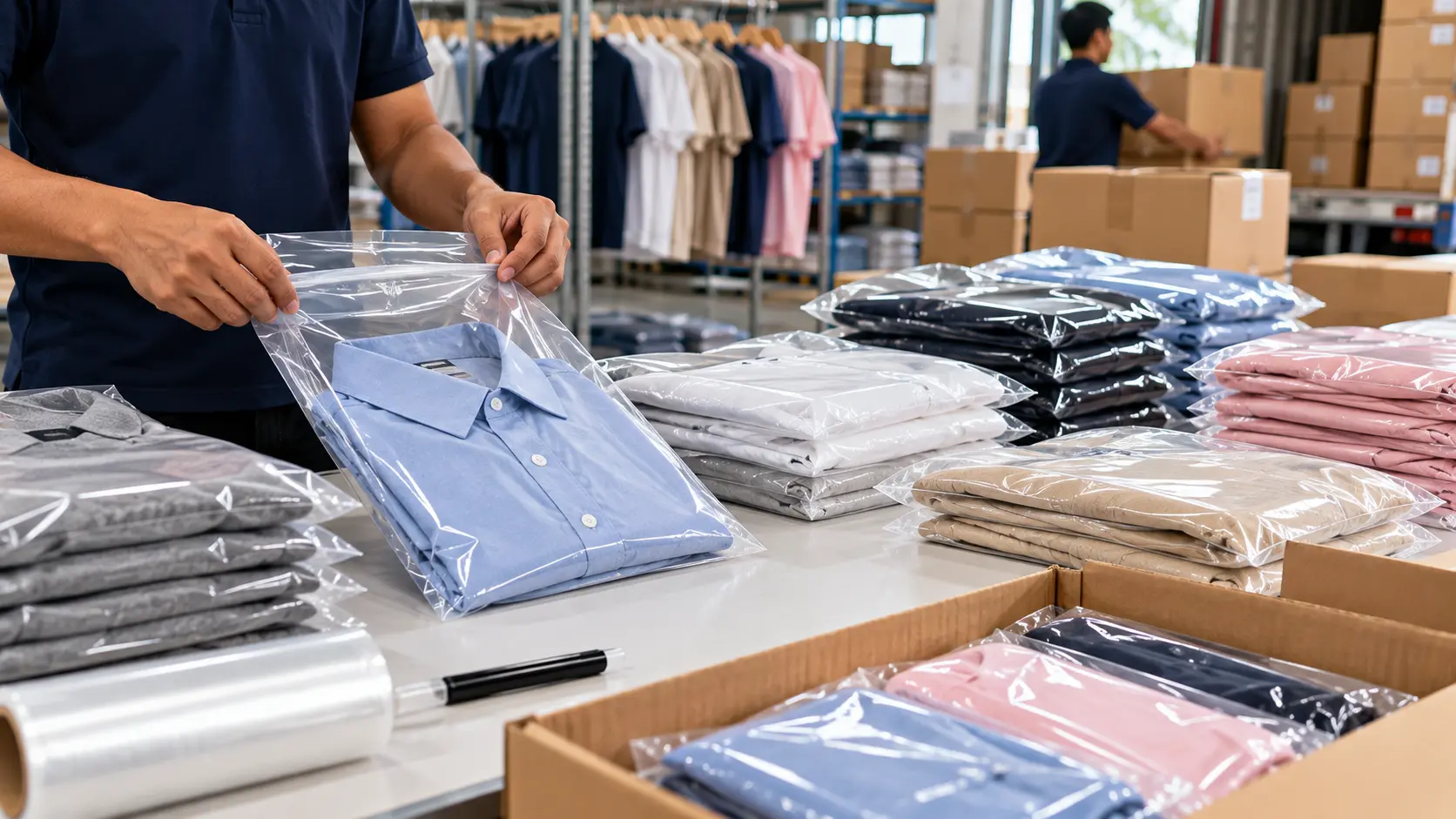
For garment manufacturers, packaging is one of the final steps before products move from production to storage, distribution, or dispatch. When multiple garment styles are packed in bulk, unclear packaging specifications can create confusion between purchasing, packing, and dispatch teams.
A bag that does not match the packed garment, an unapproved print design, or an unclear closure requirement can lead to avoidable corrections during production. Establishing clear packaging specifications before placing a bulk order helps businesses communicate their requirements and maintain consistency across packing operations.
Why Garment Packaging Specifications Matter During Bulk Dispatch
Garment packaging requirements can vary according to the product, its folded dimensions, and the way it is prepared for dispatch. A single packaging specification may not suit every garment in a manufacturer’s product range.
For example, a business packing shirts, trousers and other knitted garments may need to document separate bag dimensions for different product categories. Clear specifications help teams communicate the same requirements to the packaging supplier and reduce uncertainty before production begins.
Important details include:
- The type of garment being packed.
- The dimensions of the folded garment.
- The required bag dimensions.
- The material and closure configuration.
- Printing and branding requirements.
- The quantity required for each specification.
Documenting these details gives the purchasing team and packaging manufacturer a shared reference before a bulk order is confirmed.
1. Garment Type and Packed Dimensions
Start with the actual product being packed. Garments can vary in width, length, and thickness depending on their design and folding method.
Measure the garment after it has been folded and prepared for packing. Use these measurements to discuss the appropriate bag dimensions with the supplier.
The finished bag must accommodate the packed product and the intended packing method. Avoid selecting dimensions based only on the garment’s size label or an estimate.
When a business handles multiple garment styles, record the dimensions separately to make each packaging requirement clear.
2. Packaging Material Requirements
The material should be selected according to the intended application and the required bag configuration.
Real Packers’ LDPE Bags are one option for businesses seeking packaging for garments and other applications.
Before confirming an order, discuss the following with the manufacturer:
- The intended use of the bag.
- The required dimensions and construction.
- The handling and storage conditions relevant to the application.
- Any specific material requirements.
- Whether the proposed specification is available.
The supplier should confirm the actual product specifications rather than relying on assumptions about standard bag sizes or thicknesses.
3. Closure and Bag Configuration
The bag configuration should support the intended packing process.
If a particular closure or additional feature is required, communicate it before production. Do not assume that every closure option is compatible with every bag type.
Confirm the final configuration with the supplier and document any approved changes.
4. Printing and Branding Requirements
Packaging may also carry a company’s logo, brand identity, or other approved artwork. For custom-printed garment bags, provide the artwork and communicate the intended placement, design and colour requirements.
Before production, confirm:
- The correct logo and artwork file.
- The final design and print layout.
- The required colours.
- The placement of printed elements.
- The approved version of the artwork.
Real Packers offers custom printing and branding options. You can discuss the available configurations through its LDPE bag product page .
How to Organize Packaging Specifications for Different Garments
When multiple products require different packaging, a simple specification table can help purchasing and production teams organize the information.
| Specification | Information to Record | Why It Matters |
|---|---|---|
| Product category | Shirt, trousers or another garment | Identifies the intended application |
| Packed dimensions | Width, length and thickness | Helps determine suitable bag dimensions |
| Material | Confirmed packaging material | Clarifies the required product |
| Closure | Required closure configuration | Aligns the bag with the packing process |
| Printing | Artwork, colours and placement | Communicates branding requirements |
| Order quantity | Quantity for each specification | Clarifies the production requirement |
| Delivery details | Destination and required schedule | Supports order planning |
This table is an example of an internal specification record, not a list of standard product specifications. The actual requirements should be confirmed for each order.
How to Coordinate Packaging Requirements Before Bulk Production
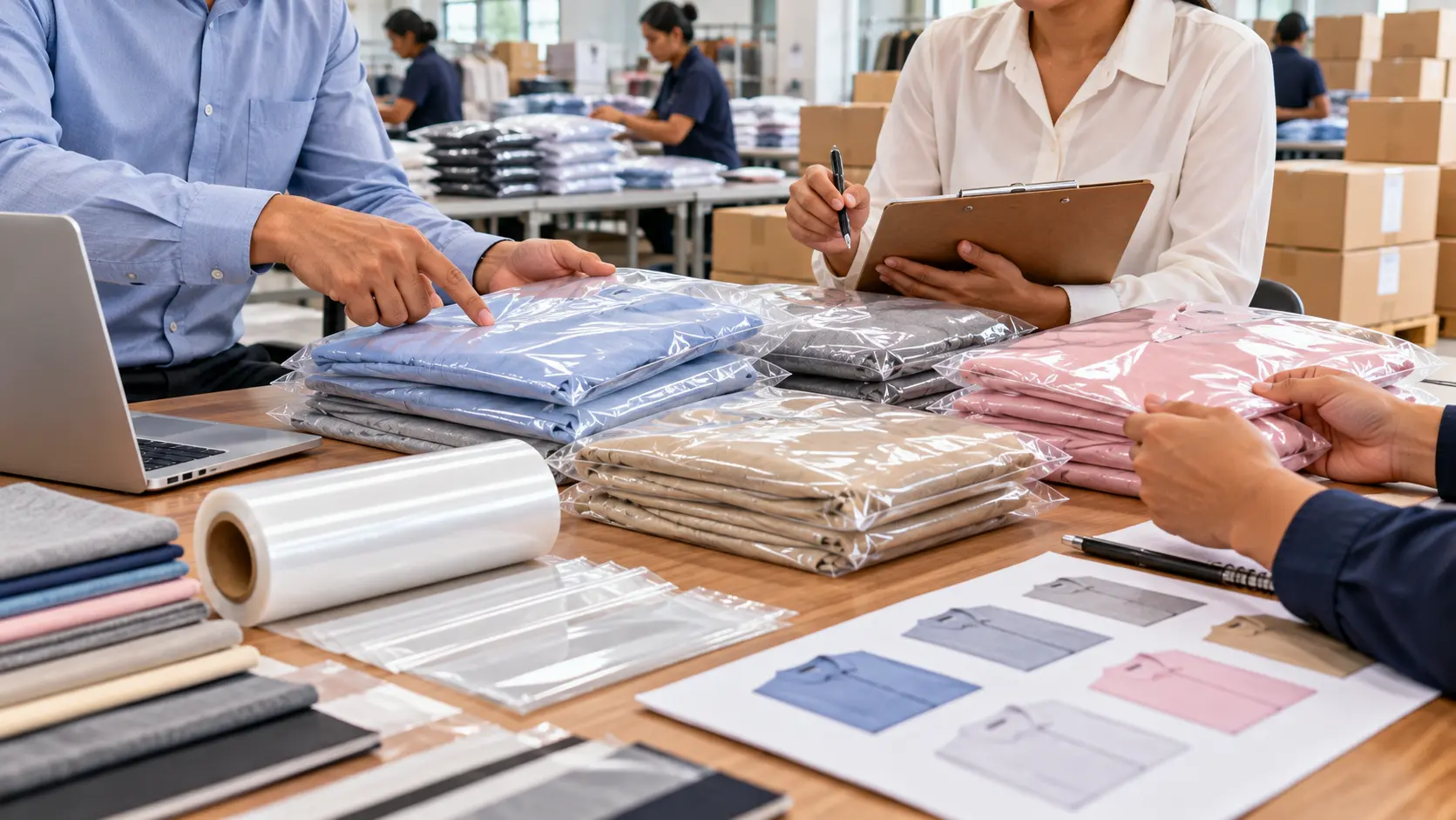
Once the requirements have been documented, the next step is to confirm them with the packaging supplier. A clear process can follow these stages:
- Identify the garment: Define which product or product category needs packaging.
- Record the measurements: Measure the garment in its intended packed condition.
- Confirm the bag specification: Discuss material, dimensions, closure, and other required features.
- Finalize the artwork: Share the approved printing design and confirm the available printing configuration.
- Confirm the order details: Agree on the quantity, specification, and delivery requirements with the supplier.
- Approve the final requirements: Ensure the purchasing team and supplier are working from the same specification before production begins.
If a business changes the garment dimensions, artwork, or bag configuration, the revised requirement should be communicated clearly rather than relying on an earlier version.
Choosing a Garment Packaging Manufacturer for Bulk Requirements
When sourcing packaging for recurring garment orders, businesses should evaluate whether a supplier can support their product requirements and order planning.
- Manufacturing capability: Understand whether the supplier manufactures the required packaging.
- Customization options: Confirm the availability of the required sizes, configurations, and printing.
- Quality documentation: Review applicable certifications and quality information.
- Production capacity: Discuss whether the supplier can accommodate the requested volume.
- Order coordination: Confirm specifications and delivery expectations before placing the order.
Real Packers began as a trading business in 1997 and established its own manufacturing facility in 2000. The company lists LDPE bags, PP bags, and other packaging products within its product range.
For additional company information, visit the Real Packers About Us page .
Businesses should confirm current product-specific capabilities and delivery commitments directly with the company.
Frequently Asked Questions
Share the garment type, packed dimensions, required bag configuration, printing requirements, order quantity, and delivery details. The manufacturer can then review the requirements and confirm the available options.
Real Packers offers customization and printing options for its packaging products. Confirm the available dimensions, thicknesses, closures, and printing configurations for the specific LDPE bag you require.
Written specifications help purchasing, production, and dispatch teams communicate the same requirements. They also provide a reference when discussing repeat orders or approved changes.
Finalize the requirements before confirming bulk production. The material, dimensions, configuration, artwork, and order quantity should be communicated and agreed upon with the supplier.
Visit the Real Packers LDPE Bags page to explore the product offering and discuss your packaging requirements.
Discuss Your Bulk Garment Packaging Requirements With Real Packers
Managing packaging for multiple garment styles becomes easier when the specifications are clearly documented and communicated before production.
If your business requires custom LDPE bags for garments, share your product dimensions, material requirements, printing details, and order quantity with Real Packers to discuss suitable packaging options.
Phone: +91 99943 55440
Email: info@realpackers.in
Website: www.realpackers.in
Discuss Your Garment Packaging Requirements →
Discuss your requirements with the team to plan packaging for your garment production and bulk dispatch needs.