


What Causes Garment Packaging Damage During Storage, Handling, and Transit?
Garment Packaging Storage, Handling & Transit Guide
What Causes Garment Packaging Damage During Storage, Handling, and Transit??
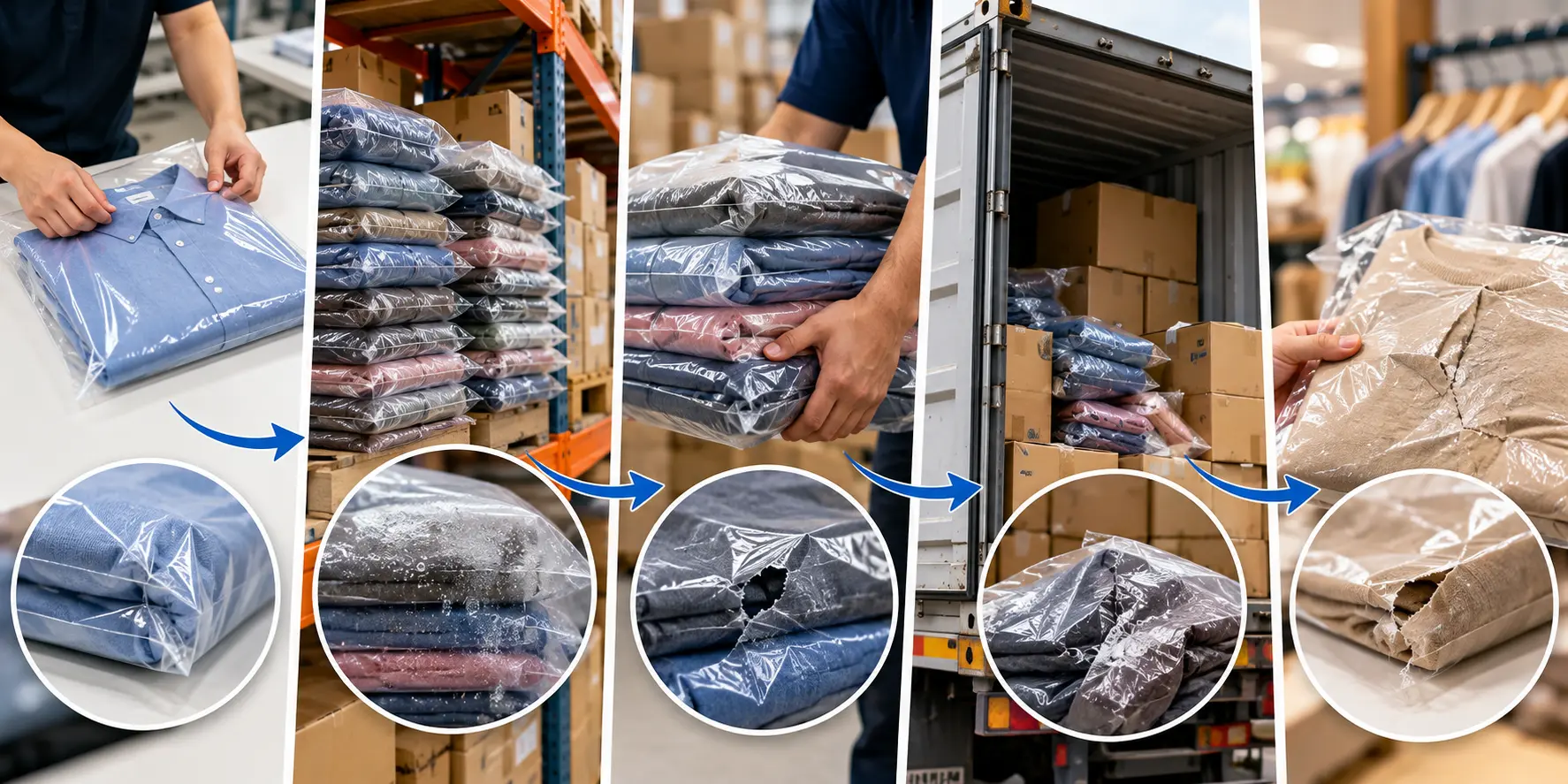
Garment packaging does more than cover a finished product. It needs to keep garments protected and presentable while they move through packing, storage, handling, and transportation.
When packaging problems appear, the cause is not always the material itself. Incorrect sizing, unsuitable closure, poor packaging practices, rough handling, or inappropriate storage conditions can all affect how well packaged garments reach their destination.
Understanding where packaging damage can occur helps garment manufacturers and exporters define the right packaging requirements before placing bulk orders.
Where Can Garment Packaging Get Damaged?
A garment package can pass through several stages before reaching the customer.
| Stage | Possible Packaging Issue | What to Consider |
|---|---|---|
| Packing | Bag does not fit the garment properly | Correct dimensions and format |
| Handling | Packaging gets stretched or damaged | Suitable packaging strength |
| Storage | Dust, moisture or poor stacking affect packs | Appropriate protection and storage |
| Transportation | Repeated movement can affect packaging | Packaging suited to handling conditions |
| Retail / Delivery | Packaging looks damaged or untidy | Presentation and clarity |
The objective is not simply to select a bag. It is to match the packaging format with the way the garment will be packed, stored, and handled.
1. Incorrect Bag Size Can Create Packaging Problems
One of the first things to consider is the relationship between the garment and the packaging dimensions.
A bag that is too small can make packing difficult and place unnecessary stress on the packaging. An unnecessarily large bag may leave excessive space around the garment.
Before bulk production, manufacturers should confirm:
- Folded garment dimensions
- Required bag length and width
- Closure or sealing format
- How the garment will be packed
- Whether the packaging needs additional space for labels or branding
The correct dimensions should be established from the actual garment and packing process rather than using a standard size for every product.
2. Packaging Format Matters During Repeated Handling
Garments may be handled several times between production and delivery.
They can move through:
Every additional handling stage creates another opportunity for packaging to be stretched, opened, or damaged.
This is why businesses should consider the complete handling journey when defining their packaging requirements.
3. Storage Conditions Can Affect Product Protection
Packaging also has to perform while garments are stored.
Businesses should consider:
- Duration of storage
- Warehouse conditions
- Protection from dust and moisture
- Stacking and movement
- Frequency of handling
- How the packed garment will be identified
Real Packers states that its packaging materials undergo quality checks, including tearing strength and presentation clarity, while packaging is also examined during stocking, packaging, and delivery processes.
4. Closure Choice Should Match the Packing Process
The way a garment bag is closed can affect how efficiently the product is packed and handled.
Depending on the packaging requirement, businesses may consider formats such as:
- Open bags
- Heat-sealed bags
- Ziplock bags
- Slider zipper bags
- Other customised formats
The closure should be selected based on the garment, packing workflow, and intended handling requirements.
Real Packers manufactures several packaging formats, including LDPE bags, ziplock bags, slider zipper bags, PP bags, and BOPP bags.
5. Presentation Is Part of Packaging Quality
Packaging damage is not limited to visible tears.
For garment businesses, the final package may also need to maintain a clean and consistent appearance.
Presentation can be affected by:
- Incorrect bag dimensions
- Poorly positioned printing
- Damaged packaging
- Unclear product information
- Inconsistent packaging across orders
For branded garments, packaging can therefore serve both a protective and presentation function.
How to Define the Right Garment Packaging Requirement
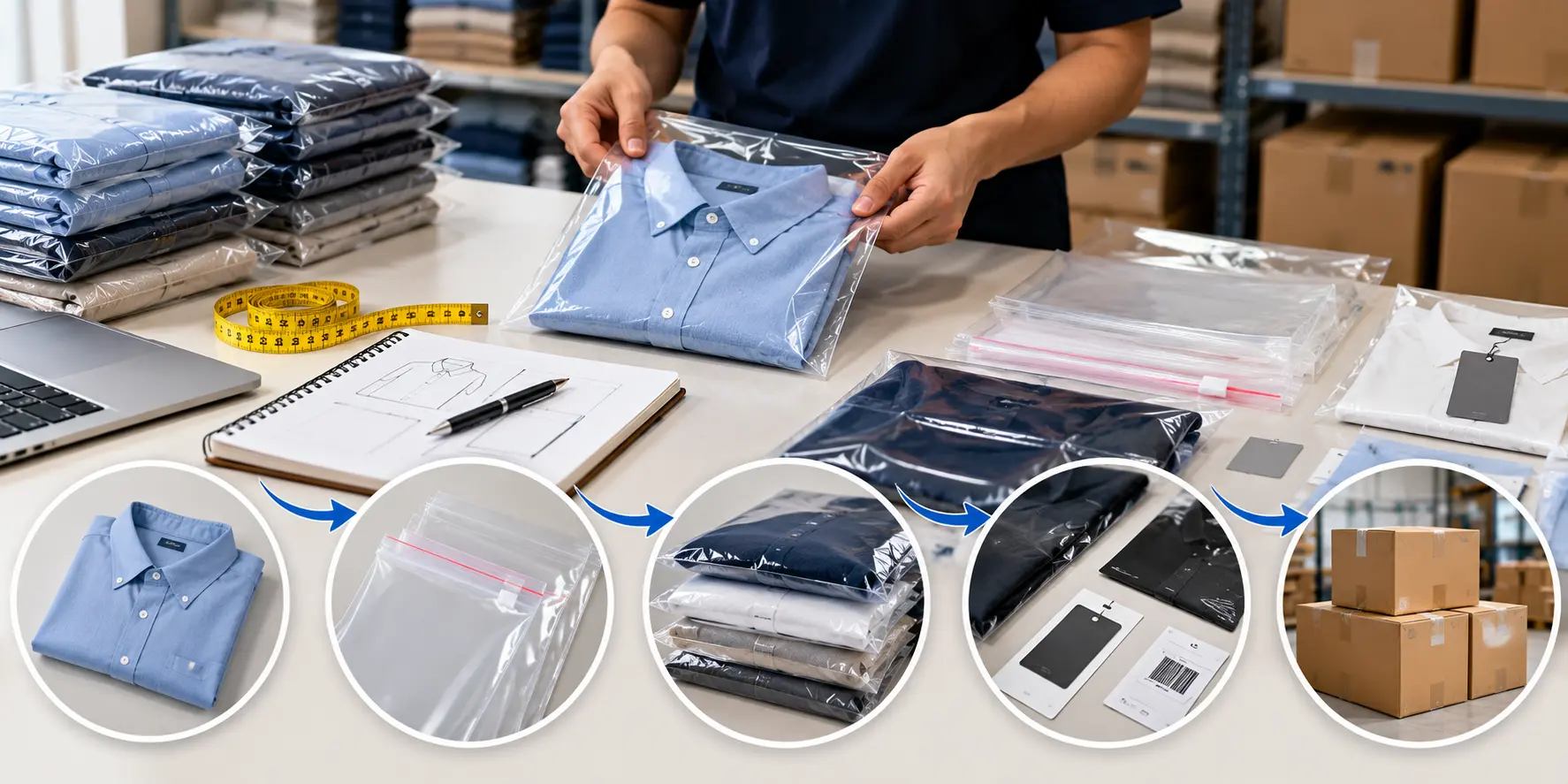
Before requesting a bulk packaging order, manufacturers can clearly communicate:
- Garment type – What product will be packed?
- Folded dimensions – What size should the package accommodate?
- Packaging material – Which packaging format is being considered?
- Closure – How should the package be opened or sealed?
- Printing – Is branding or product information required?
- Quantity – What volume is required?
- Handling conditions – How will the packaged garments be stored and transported?
For businesses specifically looking for garment packaging, Real Packers offers LDPE bags designed for garment applications, with customisation options for packaging requirements.
Why Manufacturing Capability Matters
For bulk garment packaging, consistency matters across production batches.
Real Packers began as a trading company in 1997 and moved into its own manufacturing facility in 2000. Its current infrastructure includes automated manufacturing, automated printing, and automated cutting equipment, with a stated production capacity of up to 3 lakh pieces per day.
This manufacturing capability supports businesses that require customised packaging across recurring orders rather than relying only on standard stock sizes.
Frequently Asked Questions
Incorrect dimensions, unsuitable packaging formats, handling, storage conditions, and transportation can all contribute to packaging problems.
The specification should consider the garment dimensions, packaging format, closure, printing requirements, quantity, and handling conditions.
Yes. Real Packers provides customised packaging options, including size and printing requirements for its packaging products.
Yes. Real Packers identifies both tearing strength and presentation clarity among its quality checks.
Need Packaging for Bulk Garment Orders?
A suitable packaging specification starts with understanding the garment, packing process, and handling journey.
Share Your Garment Packaging Requirements →
Share your garment packaging requirements with Real Packers to discuss suitable packaging formats, customisation and bulk-order requirements.