


Compostable T-Shirt Bags for Garment Exporters: Meeting Buyer Sustainability Compliance Without Losing Bag Strength
Compostable Garment Packaging Compliance Guide
Compostable T-Shirt Bags for Garment Exporters: Meeting Buyer Sustainability Compliance Without Losing Bag Strength
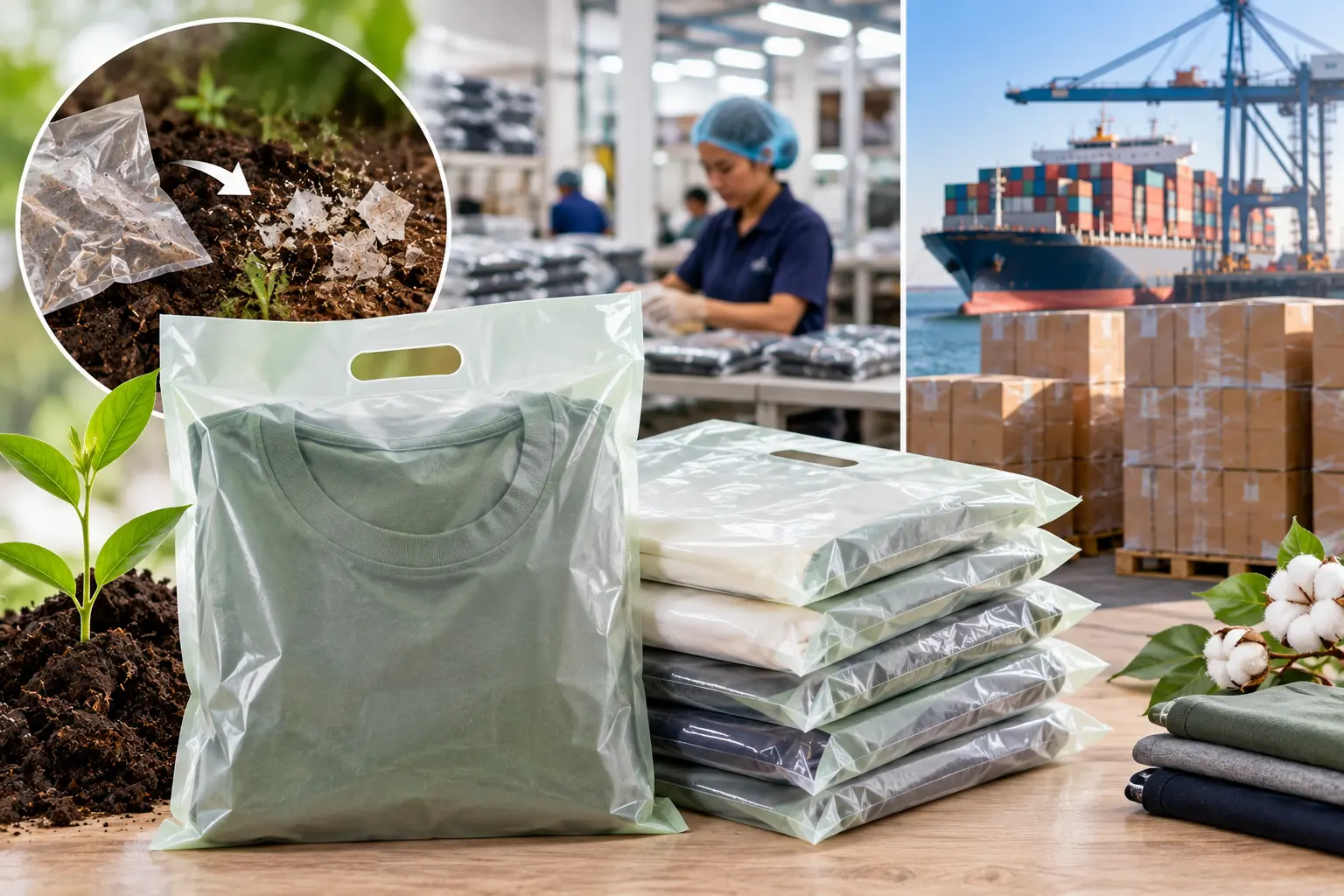
If your last purchase order came with a new clause, “packaging must be compostable,” you’re not alone. Overseas buyers, especially in the EU and US, are now writing sustainability requirements directly into contracts, and garment exporters who can’t produce certified compostable packaging risk order penalties or outright rejection at the compliance audit stage.
The good news: compliant doesn’t have to mean fragile. Here’s what “compostable” actually requires, and how to source packaging that satisfies both the buyer’s auditor and your quality control team.
Why Buyers Are Now Mandating Compostable Packaging
Retail sustainability commitments have moved from marketing language to binding supply-chain policy. Many EU and US retailers now require suppliers to disclose packaging material composition as part of the purchase order, with compostability certification treated as a pass/fail compliance gate, not a nice-to-have.
For exporters, this shifts packaging from a back-office decision to a front-line compliance risk. A shipment packed in ordinary plastic can trigger a chargeback, a rejected consignment, or removal from an approved-vendor list, even if the garments themselves meet every other spec.
Compostable vs. Biodegradable: The Distinction That Matters
This is the single most misunderstood term in sustainable packaging, and it’s exactly the kind of confusion that gets exporters into compliance trouble.
“Biodegradable” simply means a material will eventually break down, but with no defined timeframe, no defined end-state, and no guarantee it won’t just fragment into smaller pieces of plastic, or microplastics, rather than fully decompose.
“Compostable” is a stricter, certifiable standard. Certified compostable film, typically PBAT- or PLA-based, is engineered to fully break down into water, carbon dioxide, and biomass within a defined period under composting conditions, leaving no toxic residue.
Certifications to Look For
- ASTM D6400: US standard for compostability.
- EN 13432: EU standard for compostability, commonly required by European buyers.
If a buyer’s compliance clause specifies “compostable,” a bag labeled only “biodegradable” with no certification will not satisfy the audit. This distinction alone is worth confirming with your supplier before your next shipment, not after a buyer flags it.
What Buyer-Compliant Compostable Packaging Actually Requires
Passing a buyer audit isn’t just about using the right film; it’s about being able to prove it. Compliant compostable packaging needs:
- Certification documentation: Documents that can be produced on demand during a buyer or third-party audit.
- Consistent material sourcing: Every batch should match the certified formulation, not just the first sample sent for approval.
- Tear and seal strength matched to conventional LDPE: The shift to compostable film should not introduce a new damage problem during transit.
Real Packers manufactures certified compostable T-shirt bags for garment export engineered to meet these compliance requirements while holding up to the same handling conditions as standard export packaging.
Common Concern: Does Compostable Mean Weaker?
This is the objection we hear most from QC teams evaluating a switch, and it’s a fair one: early-generation compostable films earned a reputation for tearing more easily.
That gap has closed. With the right film formulation and correctly sized gusseting, compostable bags can be engineered to match the tear and seal strength of conventional LDPE for standard garment categories. The variable isn’t the material family; it’s whether the specific film formulation and construction were built for garment handling, or just for compostability on paper.
Sourcing Compostable Bags That Meet Both Compliance and Durability
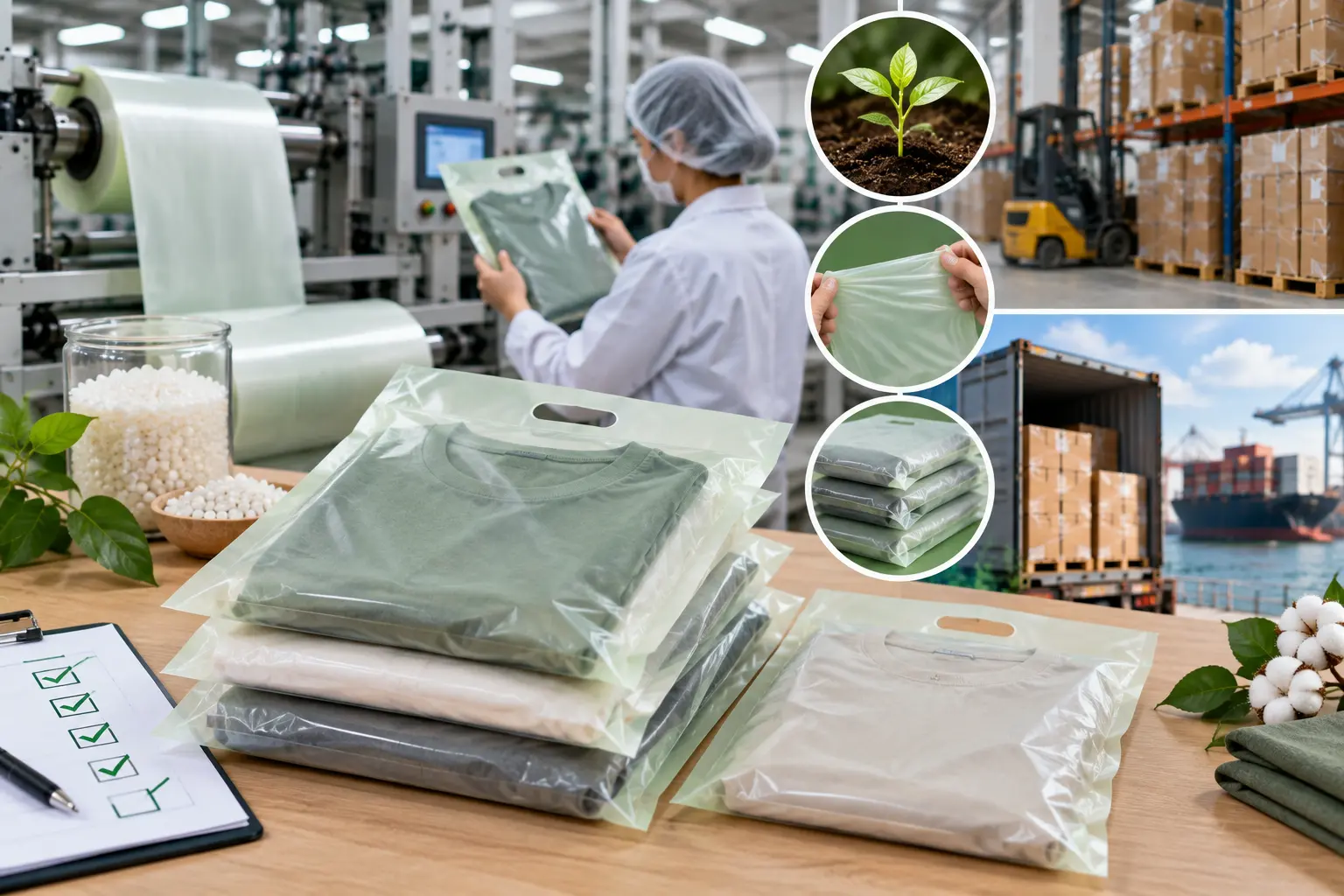
Not every supplier offering “eco-friendly bags” can produce certification on request or guarantee batch-to-batch consistency, and that’s exactly where buyer audits catch exporters out.
Look for a manufacturer that can show:
- In-house manufacturing: Film formulation and quality control remain consistent, rather than relying on resold stock from multiple upstream sources.
- ISO and Sedex certification: A broader quality and ethical-compliance signal beyond just the compostability claim.
- Custom sizing and printing on compostable stock: Buyer branding and compliance codes can be applied without switching back to conventional film.
Real Packers’ biodegradable compostable bags range is manufactured in-house under ISO and Sedex certification, giving exporters a single, auditable source for both the compliance documentation and the bag itself.
FAQs
No. Compostable material fully breaks down into non-toxic components: water, CO2, and biomass under defined composting conditions, typically within a certified timeframe. Biodegradable material may only fragment into smaller plastic pieces without ever fully decomposing, and carries no standardized certification.
They can, provided the film is certified to a recognized standard such as EN 13432. A bag marketed as “eco-friendly” or “biodegradable” without this certification will not automatically satisfy an EU buyer’s compostability clause.
With the correct film formulation and gusset construction, modern compostable bags can be engineered to match the tear and seal strength required for safe garment transit, closing the durability gap earlier compostable films were known for.
Get Compliant Before Your Next Audit
A rejected shipment over a packaging technicality costs far more than switching suppliers proactively. If your buyer has added a compostability clause or you expect one soon, get ahead of it now.